
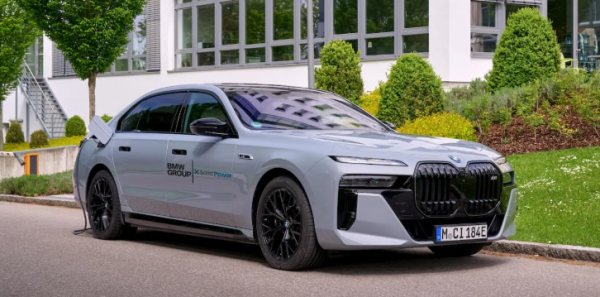
BMW is reported to be planning to revive its entry-level hatchback model, the BMW 1 Series, as an electric vehicle and launch it in 2028. The strategy is to secure younger consumers with an affordable electric car while maintaining the premium brand image.
Electrek, an electric-vehicle news outlet, reported on May 18 that BMW plans to launch the next-generation BMW 1 Series in both electric and hybrid versions. The industry sees BMW as seeking to use the model as a strategic entry point for the brand.
The backdrop is the rapid rise of Chinese electric carmakers. BYD has become the top seller of electric vehicles in Britain and is preparing to launch its luxury sub-brand Denza in the European market, heightening a sense of crisis among existing European premium brands. BMW is planning to defend market share with an electric vehicle in a relatively accessible price range.
Oliver Heilmer (올리버 하일머), BMW head of compact car design, said the next-generation BMW 1 Series will be developed on BMW's next-generation EV platform, Neue Klasse, but will retain the existing hatchback shape. He explained that the Neue Klasse design language is closer to a way of thinking than a simple exterior change.
As a result, the new 1 Series EV is likely to carry over much of the image of the existing internal combustion 1 Series rather than adopt an entirely new exterior like the BMW iX3. BMW plans to give each model a different feel and character, strengthening the identity of the entry model.
BMW is also emphasizing the strategic importance of the 1 Series internally. Bernd Koerber (베른트 쾨르버), BMW head of product and brand management, said, "The 1 Series is very important to keep the brand young and attract customers over the long term."
The interior is expected to apply the latest digital design based on Neue Klasse. It is set to feature the new Panoramic iDrive system being introduced in the new BMW iX3 and BMW i7, including a 43.3-inch display spanning the entire dashboard and a 17.7-inch central touchscreen.
The platform is expected to share the 800-volt Neue Klasse architecture and the sixth-generation e-drive system. To secure price competitiveness, a single rear electric motor configuration is seen as likely, with maximum output expected to be limited to about 322 horsepower. Battery capacity is also expected to be smaller than in higher-end models, potentially shortening driving range somewhat.
BMW is reportedly reviewing a plan to set the price for the vehicle at about 30,000 pounds, similar to the current gasoline 1 Series. It is a 'premium entry EV' strategy that emphasizes accessible pricing and practicality rather than high performance.
BMW also plans to apply a new electronic architecture called a 'digital nervous system' across its next-generation vehicles. It provides up to 20 times higher computing performance than before, with four high-performance computers integrating control of driving performance, infotainment and advanced driver assistance systems.
The industry sees BMW's strategy as leading to direct competition with Audi's A2 E-tron and Mercedes-Benz's entry-level electric vehicles. Competition among European premium brands in affordable electric vehicles is also expected to intensify around 2028.
 Jinju Hong
hongjj@d-today.co.kr
Jinju Hong
hongjj@d-today.co.kr