
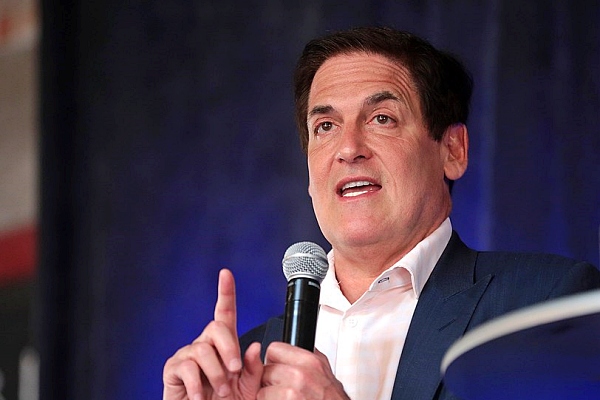
U.S. billionaire investor Mark Cuban has proposed imposing a federal-level "AI token tax" on artificial intelligence (AI) service operators.
On May 18 local time, blockchain media outlet BeInCrypto reported that Cuban proposed levying a tax of less than 50 cents per 1 million tokens at the commercial AI provider stage. It is structured to generate more revenue as AI service usage grows, and was described as closer to a sales-tax-like levy.
Cuban argued that the scope of taxation should be limited to commercial AI service providers. His plan would exclude open-source models and local inference conducted on personal devices to minimise constraints on innovation.
He compared the proposal to past regulatory debates in the cryptocurrency industry. Mark Cuban said, "In the past, the crypto industry argued that all regulation was harmful to the industry, but it ultimately entered the system of institutional regulation and lobbying," stressing that AI also needs a certain level of institutionalisation.
The core logic is energy efficiency. He argued that token-based taxation could push companies to pursue efficiency improvements such as tokenisation, caching, routing and regional computing optimisation, given that data centres needed to run large language models (LLMs) are burdening the U.S. power grid.
Cuban forecast that about $10 billion in annual tax revenue could be secured in the early stages of introducing the system, and that the scale could grow as inference demand increases. He said the funds could be used to reduce federal debt or support programmes to respond to labour market shocks from AI adoption.
Opposition emerged immediately. Anduril founder Palmer Luckey said there is already sufficient economic incentive to pursue efficiency, and that additional taxation would work against U.S. companies. He said, "This is just a tax on U.S. companies, and it will make foreign models and products more attractive," adding, "At the same time, the government will build infrastructure to track all AI usage and punish users who do not report it."
The debate centres on industrial competitiveness and the scope of regulation. Supporters believe the tax could simultaneously target efficiency improvements, easing power burdens and securing fiscal resources. Opponents worry that costs would rise only for U.S. operators, shifting demand to overseas models. The prospect that government surveillance could expand if an AI usage tracking system becomes necessary is also contentious.
Still, the likelihood of legislation is not yet high. The discussion is not included in the U.S. Congress' policy priorities, and the AI industry is also still placing more weight on growth and expanding investment than on regulation. The industry cites as a next variable whether AI companies will move toward demanding regulatory clarity and entry into the institutional system, as the cryptocurrency industry did.
 Jinju Hong
hongjj@d-today.co.kr
Jinju Hong
hongjj@d-today.co.kr