
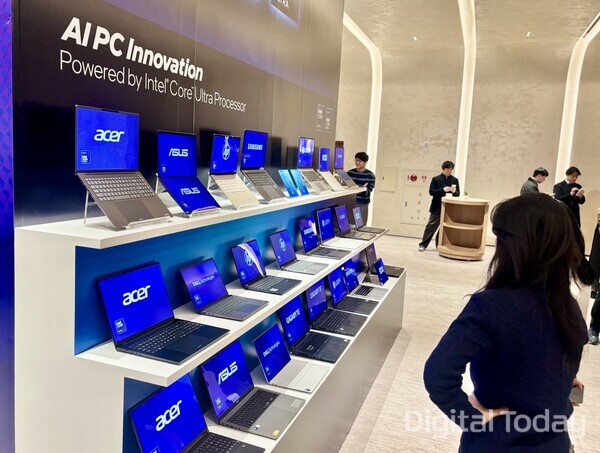
Shrinkflation, where prices rise while specifications fall, is taking hold in the global IT device market. It is hitting everything from smartphones and laptops to consoles and desktops. The shift by three memory makers, SK Hynix, Samsung Electronics and Micron, to restructure their businesses around high-bandwidth memory (HBM) for artificial intelligence (AI) is reducing supply of standard memory. While memory makers with pricing power keep a supercycle going, set makers are increasingly passing margin pressure on through higher consumer prices and lower specifications, critics say.
The root cause of this shrinkflation lies in the reshaping of the memory semiconductor supply chain. Industry officials say the three memory makers have been adjusting their businesses to align with HBM production for AI data centres. As a result, supply of standard memory such as DRAM and NAND flash is shrinking, and RAM prices are expected not to fall for more than 2 years.
Changes are appearing first in smartphones. PhoneArena reported that Google's next-generation foldable phone, the Pixel 11 Pro Fold, could see RAM cut by 4 GB to 12 GB from 16 GB in the previous model. The Pixel 11 line is also expected to lose its thermometer function, which is to be replaced by a small RGB LED array.
Motorola's 2026 Razr foldable phone will rise $100 to $800 from $700 while its base storage is halved to 128 GB from 256 GB. The Motorola Razr+ keeps the same Qualcomm Snapdragon 8S Gen 3 chip in its 2026 model as in the 2025 model, while replacing a 2x telephoto lens with a 50-megapixel ultra-wide camera.
Laptops and PC components are also under pressure. U.S. laptop maker Framework has repeatedly raised RAM module prices in recent months. Its new Framework 13 Pro was hit hard by price rises in LPDDR5X RAM and M.2 SSDs, and the 12 GB VRAM module for the Nvidia RTX 5070 mobile GPU used in the Framework Laptop 16 costs $1,200, which is $500 more than the 8 GB module. Taiwan PC component maker ASRock plans to supply a low-cost DUDIMM DDR5 module, developed with DRAM makers, that has about half the bandwidth and density of standard DDR5 memory, alongside Intel 600, 700 and 800 series chipsets.
The same trend is playing out in consoles and handheld gaming devices. Sony cut system storage on the PlayStation 5 Slim model by 175 GB to 825 GB from 1 TB last October. Retro handheld maker AYN said last month it downgraded storage on its dual-screen handheld AYN Thor from UFS 4.0 to the much slower UFS 3.1 standard. AYN later added a 16 GB RAM option and raised the price of a configuration with up to 1 TB of storage to $550.
◆ Memory makers' bargaining power grows... shrinkflation to continue until DDR6 mass production
Apple is not an exception. Apple quietly discontinued its 2024 entry-level Mac mini model priced at $600 with 256 GB of storage last week. Its small desktop now starts at $800 and requires choosing the 512 GB version. In a recent earnings call, outgoing Chief Executive Tim Cook mentioned a chip shortage affecting "several Mac models." Network equipment company Ubiquiti has started charging a separate 5-euro "memory surcharge" at checkout.
In this structure, the three memory makers are strengthening their pricing power. HBM for AI data centres provides short-term high-priced demand, while large customers such as Apple provide long-term stable demand, creating a negotiating environment that benefits the memory makers on both fronts. Set makers, meanwhile, are raising prices and cutting specifications at the same time under margin pressure, passing costs on to consumers.
The industry expects this structure to persist until full-scale mass production of DDR6, the next-generation RAM standard. In the meantime, global IT device consumers are expected to remain stuck with products that are more expensive and worse. An industry official said, "Unless AI data centre investment slows, it will be difficult to resolve the shortage of standard memory supply in the short term," adding, "Until the transition to the next standard, we think the trend of worsening specifications for the price will continue across the consumer electronics market."
 Dae-geon Seok
d2dg@d-today.co.kr
Dae-geon Seok
d2dg@d-today.co.kr