
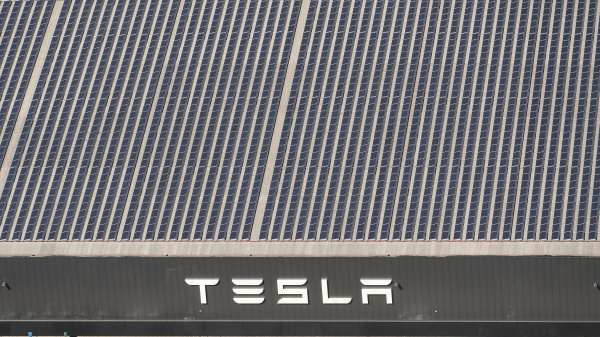
[DigitalToday reporter Jinju Hong] Tesla is effectively pushing Solar Roof, once pitched as a next-generation residential solar solution, to a lower priority and shifting its strategy toward standard solar panels.
Electrek, an electric vehicle media outlet, reported on May 14 that Tesla has recently stopped releasing Solar Roof installation figures and appears to be focusing its new products and production expansion plans on conventional rooftop solar panels.
Solar Roof was unveiled in 2016 by Elon Musk. The core idea was to replace an entire roof with solar tiles that look like ordinary roofing materials and link them to the Powerwall energy storage device to build a home energy self-sufficiency system. Musk said at the time it could be more economical than installing a conventional roof and separate solar panels, and he set a target of 1,000 installations a week by the end of 2019.
Actual adoption fell far short of the target. Tesla entered limited mass production only in 2020, and its peak quarterly deployment as of the second quarter of 2022 was about 2.5 megawatts. That is equivalent to about 23 roof installations a week. The cumulative number of installations in the United States was also said to be about 3,000 as of early 2023. Tesla disputed the figure but did not release its own data.
Signs of a pullback became clearer afterward. Tesla recorded declines in solar deployments for at least 4 consecutive quarters after the fourth quarter of 2022, and from the first quarter of 2024 it removed the solar deployment line item itself from its results report. Energy business revenue increased, but analysis says that was largely driven by growth in the Megapack large-scale energy storage system, partly offsetting declines in the solar business.
The customer experience also deteriorated. Tesla has effectively suspended its online Solar Roof quoting service and is operating through referrals to certified external installers. Some regions have seen project cancellations, and a significant share of on-site staff is said to be focusing on maintenance and repairs rather than new installations.
Confusion over responsibility also repeated during the process. Critics say installers blamed Tesla for design problems, while Tesla pointed to external contractors for construction issues. In user communities, complaints continued over service delays, missed appointments and loss of contact with customer support.
There was also criticism of the product design. Solar Roof uses string inverters rather than microinverters, which can reduce generation efficiency across an entire circuit if part of the roof is shaded. Some users said performance was more than 20 percent below the expected output presented at the time of contract. Tesla is said to have explained in some cases that weather conditions or usage patterns were the cause.
Price competitiveness was also an issue. The average installation cost for Solar Roof was about $106,000 before tax incentives, about $46,000 more expensive than combining a standard roof replacement with conventional solar panels. The payback period was estimated at 15 to 25 years, longer than the 7 to 12 years for standard panels.
In 2023, consumer claims that prices nearly doubled after contracts were signed escalated into a class-action lawsuit. Some customers said their contract price rose from $72,000 to $146,000 just before installation. Tesla ultimately moved to settle for about $6 million.
By contrast, Tesla's recent moves have focused on expanding its standard panel business. The company unveiled in early 2026 a new solar panel, the TSP-420, assembled at Gigafactory New York in Buffalo. The product applies an 18-zone power optimisation system.
Michael Snyder (마이클 스나이더), Tesla's vice president for energy engineering, also introduced a new residential solar product in the company's third-quarter 2025 earnings announcement and stressed "industry-leading aesthetics". The product he mentioned, however, was not Solar Roof but a standard panel installed on an existing roof.
Plans to expand production are also panel-centric. Musk said at the Davos forum early this year that Tesla would expand solar manufacturing capacity in the United States to an annual level of 100 gigawatts, and Tesla job postings also included a goal of building a U.S.-based 100-gigawatt solar manufacturing system by 2028. The company has also begun expanding solar staffing again for the first time in several years.
In the end, Tesla's recent product announcements, hiring and production investment directions are all focused on its conventional solar panel business. Solar Roof has not been officially terminated, but with the shift to non-disclosure of installation figures, reduced marketing and continued reliance on external contractors, it appears to have been pushed down the list of core business priorities.
 Jinju Hong
hongjj@d-today.co.kr
Jinju Hong
hongjj@d-today.co.kr