
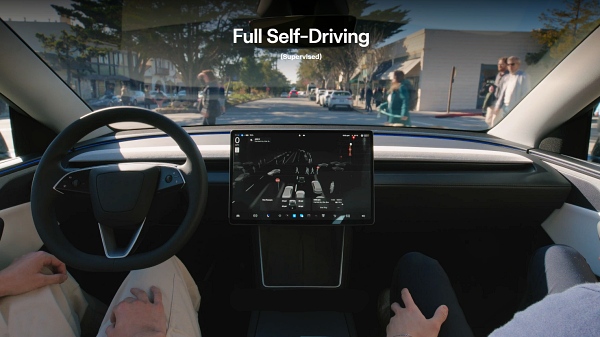
[Digital Today reporter Jinju Hong (홍진주)] Tesla has disclosed for the first time detailed information on 17 crash reports from self-driving test runs that it submitted to the U.S. National Highway Traffic Safety Administration (NHTSA). With previously undisclosed accounts now revealed, a clearer picture has emerged of what problems occurred during Tesla robotaxi test operations.
Electrek, an electric-vehicle news outlet, reported on May 15 that the disclosed crashes all occurred during Tesla robotaxi test runs in Austin, Texas, between July 2025 and March 2026.
All vehicles involved were 2026 Model Y cars, with the self-driving system activated and a safety monitor aboard at the time.
According to the disclosed materials, 13 of the 17 cases involved only property damage. Of the remaining crashes, 2 had no injuries, 1 was classified as a minor injury not requiring hospitalization, and another was classified as a minor injury requiring hospitalization.
Many of the crash types were cases that are difficult to view as the direct fault of Tesla's self-driving system. In repeated incidents, vehicles stopped at a red light or stop sign were rear-ended by the vehicle behind. One case involved a sport utility vehicle, or SUV, rear-ending the car while it was waiting at a red light. Another involved a truck hitting a vehicle that was stopped at a stop sign.
Other cases included a pedicab passing through a bike lane brushing a side mirror of a stopped vehicle, and a city bus making a right turn and contacting the vehicle's side.
Tesla had kept the accident narratives undisclosed, saying they could contain "confidential business information". It also argued that if related data were disclosed, competitors could use it to analyze progress in its self-driving technology, causing financial harm.
This time, it resubmitted the existing reports after removing the nondisclosure markings. Some of the disclosed incidents, however, have also drawn criticism as examples showing limits of the self-driving system.
The most noted case was a crash that occurred after a remote driver intervened. In a July 2025 incident, the self-driving system could not proceed, the safety monitor requested assistance, and a remote driver then took over control. The vehicle climbed a curb at about 8 miles per hour, or about 13 km per hour, and hit a metal fence. The safety monitor suffered a minor injury.
A similar case occurred in January 2026. After the safety monitor requested navigation support, a remote driver took over the vehicle, but it hit a construction barrier at about 9 miles per hour, or about 14 km per hour.
Tesla also disclosed crashes believed to stem from issues in recognizing the surroundings. In September 2025, after making an unprotected left turn and entering a parking lot, the vehicle came into contact with a metal chain. In October that year, a side mirror struck a dump trailer coupling that protruded toward the road.
In January 2026, the vehicle hit a wooden utility pole while reversing in a blocked alley. In another crash, it clipped the edge of a curb while reversing into a parking space.
The crash described as most serious by injury criteria was also disclosed. A Tesla vehicle stopped in a right-turn-only lane to yield to cross traffic and then moved forward slowly at about 2 miles per hour. An SUV following behind rear-ended the vehicle, and the safety monitor complained of pain and received treatment. Responsibility may be classified on the other vehicle's side, but questions were also raised about whether an overly cautious self-driving pattern could instead increase the risk of being rear-ended.
Other cases included a dog suddenly running into an intersection and colliding with the vehicle's lower bumper before being pushed toward the opposite lane, contact with a vehicle reversing in a parking-lot lane, and a curb collision while the vehicle slowed and moved to the roadside after tire damage on an uneven surface. The vehicle was reported to have started the Minimal Risk Condition Maneuver procedure at the time.
Market observers also say the disclosures show it is difficult to judge self-driving safety based only on the number of crashes. They also say that crashes occurred even after remote-driver intervention and that repeated contacts during reversing or avoidance of small obstacles highlight issues Tesla must resolve as it expands toward fully driverless operations without safety monitors.
 Jinju Hong
hongjj@d-today.co.kr
Jinju Hong
hongjj@d-today.co.kr