
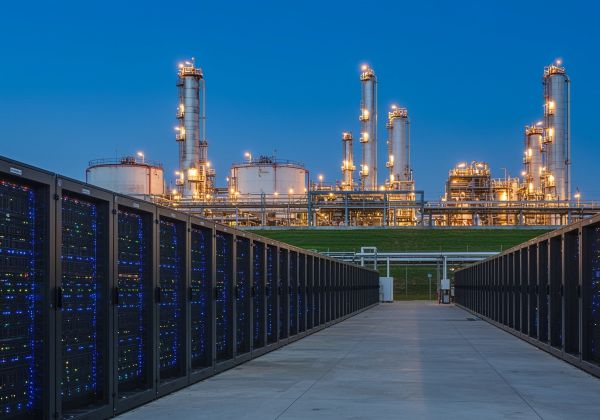
Large-scale data centre projects under way in the United States are being delayed or cancelled after running into power infrastructure shortages and opposition from local residents. Demand for data centres is surging as artificial intelligence spreads, but conflicts are also growing over heavy electricity and water use and the environmental burden.
On May 17 local time, IT outlet TechRadar reported that many planned U.S. data centre projects in 2026 have been postponed or scrapped due to a semiconductor shortage, grid constraints and community opposition.
The key issue is power consumption. Electricity price comparison service Electric Choice estimated that more than 4,500 data centres in the United States used about 176 terawatt-hours of electricity in 2023. That is enough to supply more than 16 million households annually and amounts to about 4.4 percent of total U.S. power consumption.
The expansion of AI data centres is adding to the power burden. The Electric Power Research Institute (EPRI) forecast that, as of 2024, AI data centres’ electricity use could rise to 10 to 20 percent of total U.S. power consumption.
Against that backdrop, opposition to data centre construction is spreading across the United States. The slogan “People Over Profits,” which emerged in Box Elder County, Utah, is now used symbolically among anti-data-centre groups nationwide.
An analysis suggests residents see rising electricity bills and worsening living conditions as more immediate problems than claims that data centres help local economies and create jobs.
How power is supplied is also contentious. Developers are trying to meet demand by building their own generation facilities or expanding new transmission and distribution infrastructure, but some projects are opting for natural gas turbine generators.
Residents raise concerns about pollution and noise. In rural areas, generator noise can carry far, and near densely populated areas there have also been cases of people complaining of health issues due to ultra-low-frequency noise generated by data centres.
The Trump administration has eased some environmental regulations to respond to power shortages for data centres and has also moved to support restarting coal and gas power plants that had been shut down. The steps are seen as measures to expand AI infrastructure, but concerns are also growing that they could increase the environmental burden on local areas.
There have also been cases of electricity prices rising near data centres. Reports said some areas saw power bills rise by as much as 267 percent after data-centre demand increased. In a JD Power survey released in January, more than 1 in 5 Americans said it was difficult to afford their electricity bills.
Water use is also emerging as another source of conflict. Researchers at the University of California, Riverside estimated that processing a 100-word AI prompt uses about 519 millilitres of water. Sam Altman (샘 알트먼), OpenAI’s chief executive, said water use per prompt is “about one fifteenth of a teaspoon,” but did not disclose a specific basis for the calculation.
Some point out that the key issue is not the AI service itself but how much local water resources are consumed in the data centre cooling process.
According to estimates by the Environmental and Energy Study Institute, a single large data centre can use up to 5 million gallons of water a day. That is comparable to the total water use of a city with a population of 10,000 to 50,000.
Some water evaporates during cooling and some is recycled, but there are concerns that drought-hit areas or regions with water shortages could see greater strain on local ecosystems. Concerns are also being raised that more wastewater could overwhelm existing treatment capacity.
The gap between expectations and reality over job creation is also disputed. A Brookings study found that, after bringing in data centres, employment in information technology and professional services rose by about 22 percent and 16 percent, respectively, six years later.
But large AI data centres require specialised equipment and skilled workers, making it hard for local firms to participate immediately, and some say the number of permanent workers after completion is also smaller than expected. Smaller facilities typically employ dozens, and even large facilities often deploy only a workforce in the hundreds to run operations, the explanation said.
Market participants see data centre expansion as likely to continue as AI competition accelerates. But an analysis says conflicts over power and water use, environmental burdens and residents’ health are also intensifying, pushing data centre development into a phase where it will be hard to avoid clashes with local communities.
 Jinju Hong
hongjj@d-today.co.kr
Jinju Hong
hongjj@d-today.co.kr