
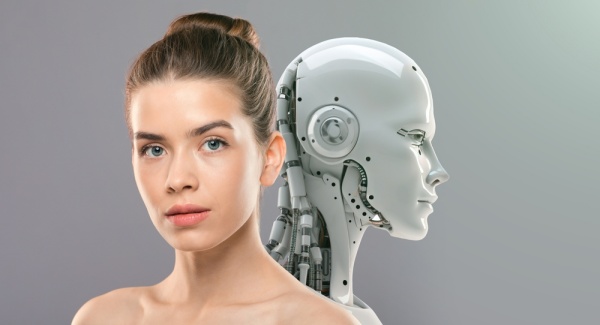
As more patients visit plastic surgery and dermatology clinics with unrealistic images created by generative artificial intelligence, doctors are increasingly having to re-explain the range of what is possible and safety standards.
Business Insider reported on May 16 that ChatGPT, various AI image generators and filter apps have emerged as a new factor in consultations by raising expectations for cosmetic surgery results.
New York dermatologist Rachel Westbay (레이철 웨스트베이) said she was surprised earlier this year by an AI-generated image a patient brought in. The image showed lips that were disproportionately large for the face and eyes exaggerated like a doll’s. Westbay said it was like someone saying they want to look like “The Little Mermaid,” and pointed out that AI images do not properly reflect an individual’s facial structure, racial characteristics or overall balance.
Doctors say the gap between patient expectations and actual surgical outcomes has grown larger. A survey released last year by Beth Israel Deaconess Medical Center in the United States found that people who had used AI for photo retouching had significantly higher expectations for plastic surgery results.
Steven Williams (스티븐 윌리엄스), president of the American Association of Plastic Surgeons (AAPS), said he is seeing patients bring in AI-generated images for breast augmentation, body contouring and rhinoplasty. “The important thing is still recognizing that there are limits,” he said. “Image generation is easier than surgery.” That means images on a screen can be made in any way, but the human body cannot depart from anatomical structures and physiological safety standards.
In actual consultations, such clashes appear more clearly. Dana Jenkins (데이나 젠킨스), 60, who was preparing for a facelift, entered a treatment plan into ChatGPT to create a post-surgery image. The result showed skin without pores and a sharp jawline that was far from her real appearance. Jenkins said she was instead relieved after hearing it would be difficult to achieve at a hospital, adding: “That wasn’t reality.”
Manhattan plastic surgeon Sachin Shridharani (사친 슈리다라니) also introduced a case in which a patient in her 70s brought in an AI image and asked to look as young as her granddaughter. He said he explained that he could not restore her face exactly as it was when she was young, but the patient did not back down, he added.
Doctors are explaining the possibility of filters being used, nose shapes that could harm breathing function, and waistlines that are impossible given the body’s structure. Williams stressed that “the human body is not clay,” and said surgery involves physiological functions and organ systems that must be protected.
Beauty standards created by AI also connect with the existing “filter culture.” In the past, patients brought in fashion magazine photos, but recently retouched social media images and AI-generated photos have taken their place. A survey released in 2019 by the American Academy of Facial Plastic and Reconstructive Surgery (AAFPRS) found that 72 percent of facial plastic surgeons had encountered patients who wanted procedures to look better in selfies. The trend known as “Snapchat dysmorphia” is combining with generative AI to create stronger expectations.
Still, doctors did not view AI only negatively. Justin Sacks (저스틴 색스), a reconstructive plastic surgeon at the University of Washington School of Medicine, said he uses AI tools in practice as a digital documentation aid and thought they could also help with future doctor-led medical simulations. For example, if reconstruction surgery for breast cancer patients could show results in real time reflecting silicone implant volume or soft-tissue coverage, the way doctors explain and adjust expectations could change.
Amid this trend, doctors say they need to check patients’ motivations before technology. Williams said he asks patients what result they are expecting. If a patient is making a new job, a new relationship or a change in social status the goal of surgery, that can be a warning sign, he said.
AI images can be a starting point for consultations, but it is being re-emphasised that actual medical decisions must be made within safety and realism. Generative AI is broadening reference materials for cosmetic surgery consultations while giving doctors a new task of adjusting unrealistic expectations.
 Yoonseo Lee
yslee@d-today.co.kr
Yoonseo Lee
yslee@d-today.co.kr