
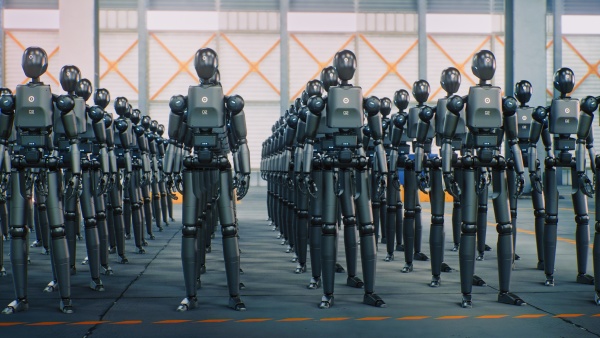
Southwest Airlines has imposed a blanket ban on carrying humanoid and animal-shaped robots onboard and transporting them as checked baggage.
According to blockchain news outlet Cryptopolitan on May 16, Southwest updated its website rules and said robots resembling people or animals cannot be transported in either the cabin or the baggage hold regardless of their size or purpose.
The move followed a series of controversial cases after robots were brought onto Southwest flights. On a flight departing Oakland, the aircraft waited on the runway while crew decided how to secure a humanoid machine a passenger brought. The robot was initially classified as carry-on baggage, but the flight took off only after it was moved to a window seat and its battery was removed.
In another case, Dallas businessman Aaron Mehdi-Jazadeh (애런 메흐디자데) bought an extra seat for his 3.5-foot-tall humanoid robot, “Stewie,” on a flight from Las Vegas to Dallas instead of sending it as cargo. Mehdi-Jazadeh told local media most passengers found the sight of a robot flying very interesting. The robot traveled with a smaller battery fitted to pass security screening, and it was also filmed walking through an airport terminal.
Southwest, however, pointed to lithium-ion batteries as the problem. Most humanoid robots use such batteries, and the airline judged they could lead to fires onboard. Lithium-ion batteries have already caused aircraft fires, and one case reportedly led to an emergency landing in San Diego.
The U.S. Federal Aviation Administration classifies all lithium-ion batteries as having the potential for thermal runaway. The FAA says thermal runaway can occur without warning and may be caused by damage, overcharging, exposure to water or manufacturing defects. Crew receive training to respond to battery fires in the cabin, but the airline believes the large battery packs used in humanoid robots pose greater risks than existing carry-on rules anticipate.
Southwest stated in its new baggage policy that it does not allow cabin carriage or checked-baggage transport of humanoid or animal-shaped robots regardless of size or purpose. Small robots and toys that fit standard carry-on size may be brought onboard if they meet existing hazardous materials rules.
So far, there have been no confirmed cases of other major U.S. airlines announcing separate bans on humanoid and animal-shaped robots. Against that backdrop, Southwest's move is seen as an example of aviation safety rules beginning to catch up with the spread of personal robots.
The broader aviation industry is not uniformly moving to exclude robots. Japan Airlines has begun a three-year trial deploying 2 humanoid robots from Unitree Robotics at Tokyo's Haneda airport. The robots handle baggage loading, container transport and cabin cleaning. Japan Airlines chose a humanoid form because airport facilities are designed around people rather than wheeled machines. Bipedal robots can move through existing infrastructure without redesigning facilities.
Japan's working-age population is also projected to fall 31 percent between 2023 and 2060. Airlines are simultaneously considering limiting robots as passengers while expanding their use as work tools to offset staffing shortages in airport operations.
 Jinju Hong
hongjj@d-today.co.kr
Jinju Hong
hongjj@d-today.co.kr