
China's auto industry is pushing to create a new standard for low-cost electric vehicles modeled on Japan's kei-car ecosystem. The idea is to bring cheap, small EVs aimed at older people and rural areas into the regulated system to ease weak domestic demand and lay the groundwork to target emerging overseas markets.
Electrek, an electric-vehicle outlet, reported on May 14 that Cui Dongshu (추이둥수), secretary-general of the China Passenger Car Association, recently proposed on WeChat the need to introduce a new category of low-cost EVs. He said shrinking demand for low-priced vehicles is a key bottleneck preventing an industry recovery in China's auto market.
EV sales in China continue to rise, but overall auto consumption has not rebounded as much as expected. The association said April retail EV sales were about 860,000 units, slightly up from the previous month but below 905,000 a year earlier.
Demand still exists for ultra-cheap electric mini-cars in rural areas and among older consumers. The problem is that many of the low-speed EVs that have filled this market have not been properly subject to safety regulations. Some vehicles lacked even basic safety equipment such as airbags or reinforced body structures.
The Ministry of Industry and Information Technology said about 830,000 traffic accidents linked to low-speed EVs occurred from 2012 to 2016, with about 18,000 deaths. The Chinese government ultimately banned such vehicles completely from 2024.
Cui argued a "regulated middle ground" is needed to fill the gap. He said China should institutionalise a separate market for small EVs that meet safety standards while keeping prices low, in order to absorb demand in county-level cities and among older consumers. He proposed formalising standards such as limits on vehicle size, caps on motor output and a minimum driving range, and said a simplified C7-only licensing system for older and novice drivers should also be introduced.
Japan and the European Union were cited as overseas reference cases. Japan's kei cars are a small-vehicle segment with specifications of 3.4 metres or less in length and 660 cc or less in engine displacement, and accounted for about one-third of passenger car sales in Japan in the first half of this year. Annual sales are about 1.67 million units. Cui said China could also bring demand for low-cost EVs into the regulated system if it creates independent specifications and tax and subsidy frameworks like Japan's.
The EU's support measures for small EVs were also mentioned. The European Commission provides additional emissions credit benefits for EVs 4.2 metres or less in length to encourage production of small electric vehicles.
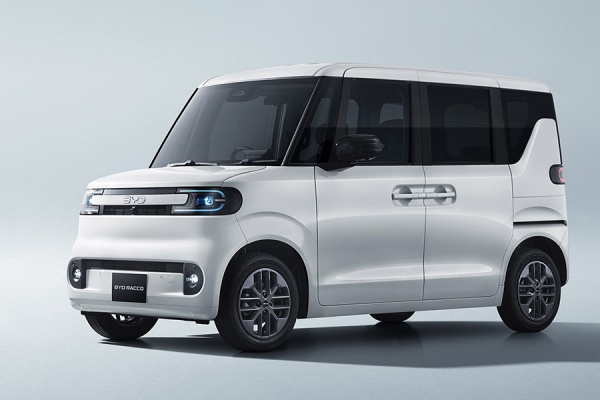
Chinese automakers are already testing the market potential. BYD last year unveiled the Rako, an electric kei car for the Japanese market. The model has a 3,395 mm body, a 20 kWh battery, a driving range of about 180 km and fast-charging, and is scheduled for launch in Japan this summer.
Sales examples of ultra-cheap EVs are also continuing in China. Bestune Pony was launched at a price of under $5,000, and Chery's QQ3 secured about 57,000 orders. The Toyota joint-venture electric vehicle bZ3C has also maintained strong sales on the back of a low-price strategy.
Cui stressed that demand itself has already been sufficiently confirmed, and that the problem is a lack of an institutional framework to absorb it safely.
The industry is watching whether the idea could be linked to an export strategy beyond a simple domestic-demand measure. The view is that if a standard for low-cost EVs that meets common safety standards takes hold in markets with strong demand for cheap small cars, such as Southeast Asia and India, Chinese companies could expand overseas faster.
China's EV exports are rising quickly. China exported more than 400,000 EVs in April alone, and the pace of increase was reported to have more than doubled from last year. The industry believes that if China institutionalises low-cost electric kei cars as an independent segment, the possibility will grow that it could simultaneously aim for a domestic rebound and overseas market expansion.
 Jinju Hong
hongjj@d-today.co.kr
Jinju Hong
hongjj@d-today.co.kr