
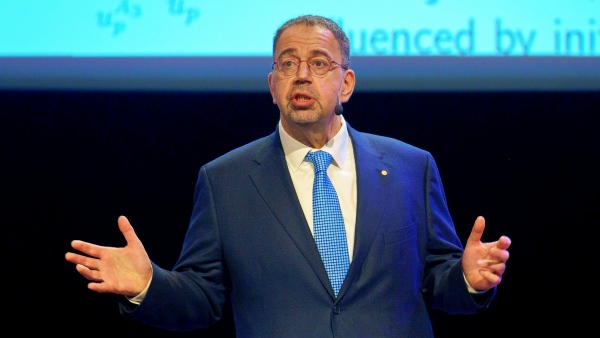
Nobel economics laureate Daron Acemoglu said the claim that AI is replacing large numbers of jobs has not yet been confirmed by data. On May 12, local time, MIT Technology Review said he pointed to AI agents, AI companies’ hiring of economists and the usability of AI apps as key variables that will divide the AI economy.
In a paper released before receiving the 2024 Nobel prize, Acemoglu forecast that AI might slightly lift U.S. productivity but would not make human labor itself unnecessary. He said that view has not changed much even 2 years later. He cited the fact that various studies have yet to show a clear impact of AI on employment rates or layoffs.
He focused in particular on AI agents. AI agents are drawing attention as tools that carry out given goals on their own, beyond chatbots that answer questions. Companies present them as a means to replace human labor, but Acemoglu said they are closer to tools that supplement specific tasks than those that take over an entire job.
That is because a single job is made up of a combination of many tasks. For example, an X-ray technician handles 30 different tasks, from organizing patient histories to storing mammography images. People move naturally across different formats, databases and work methods, but it remains uncertain whether AI can coordinate at the same level. He said that if agents cannot switch flexibly between tasks, many jobs could avoid being replaced by AI.
He also highlighted that AI companies are increasingly hiring economists. OpenAI hired Duke University’s Roni Chatterji as its chief economist in 2024, and last year Chatterji said he was studying AI and jobs with Jason Furman. Anthropic has gathered 10 economists to conduct similar research. Google DeepMind hired University of Chicago economist Alex Imas last week as director of “AGI economics.”
Acemoglu said the moves are linked to public AI skepticism that is growing over jobs. AI companies have a strong incentive to lead the economic narrative around their technology, he said. He expressed concern that key research on AI’s impact on labor could tilt further toward companies that stand to gain more as it reaches favorable conclusions.
As another variable, he cited the usability of AI apps. Unlike software such as PowerPoint or Word that anyone could install and immediately use for the task they wanted, AI-based apps have not yet shown comparable usability, he said. Anyone can talk to an AI model, but it takes time before an ordinary worker can use it productively in real work, he added.
He said the emergence of apps that make AI easier to use will be a key signal going forward. But with cases citing a worse job market for college graduates appearing alongside indicators showing no clear change in productivity, he said the key word explaining the AI economy now is uncertainty.
 Hyunwoo Chu
cookinpapa@d-today.co.kr
Hyunwoo Chu
cookinpapa@d-today.co.kr