
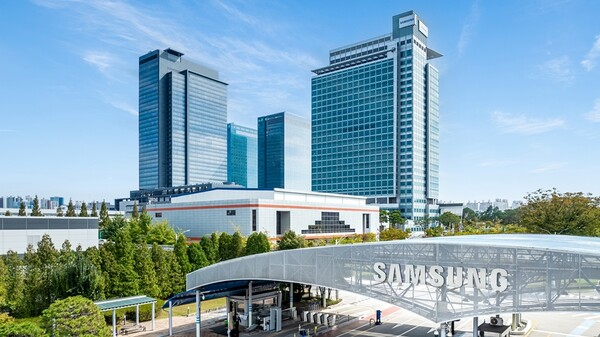
Samsung Electronics and its labor union failed to reach an agreement in post-mediation talks at the National Labor Relations Commission, making a general strike on May 21 more likely. In the second post-mediation meeting, which began at 10 a.m. on May 12 and ran for 17 hours into the next day, the sides failed to narrow differences over performance bonus payment standards and caps. The commission said at 2:50 a.m. on May 13 that it decided to end the post-mediation without presenting a proposal because the gap between the sides was large and the union requested that the process be halted.
Choi Seung-ho (최승호), chairman of the Samsung Electronics branch of the National Samsung Electronics Union, the company’s biggest union, met reporters immediately after the second meeting and declared the final breakdown, saying differences had not narrowed. Choi said he requested a mediation proposal and waited more than 12 hours, but the proposal was a step back from the union’s demands. He said it would keep the existing excess profit sharing bonus system rather than make bonuses more transparent. The union said 41,000 members had expressed willingness to join a general strike.
Samsung Electronics said in an internal notice that the post-mediation, which the government had put together with difficulty, was scrapped because the union declared a breakdown, and it expressed regret. The company said the union was rejecting flexible system-building tied to business performance and was insisting throughout only on a rigid system. It added it would continue efforts until the end, through sincere dialogue, to prevent the worst outcome.
The government also moved to respond immediately. Koo Yun-cheol (구윤철), deputy prime minister for the economy and minister of the Ministry of Finance and Economy, urged in a social media post that Samsung Electronics is an important company that the world is watching and that both sides should keep working to reach a principle-based deal, taking into account the current business situation and the impact on the national economy. Koo said a strike must never happen and that the government would support efforts until the end so the issue is resolved through principle-based negotiations in any case.
Samsung Electronics and the union also failed to reach an agreement in the first mediation by the commission in February to March. They held renegotiations over two days, through a first post-mediation meeting that lasted 11 hours and 30 minutes on May 11 and then a second meeting, but it ended without results. The commission added that it can provide support at any time if both sides agree to request additional post-mediation talks.
If a strike materialises, the economic damage is also expected to be significant. Some in industry have analysed that the scale of damage could exceed 40 trillion won. Concerns have also been raised that the dispute overlaps with a memory semiconductor super cycle phase and could go beyond short-term production disruption, leading to mid- to long-term risks such as customer departures during a semiconductor boom. Some also mention the option of an emergency mediation order that the employment and labor minister can invoke when there is concern that industrial action could significantly harm the national economy.
 Seok Dae-geon
d2dg@d-today.co.kr
Seok Dae-geon
d2dg@d-today.co.kr