
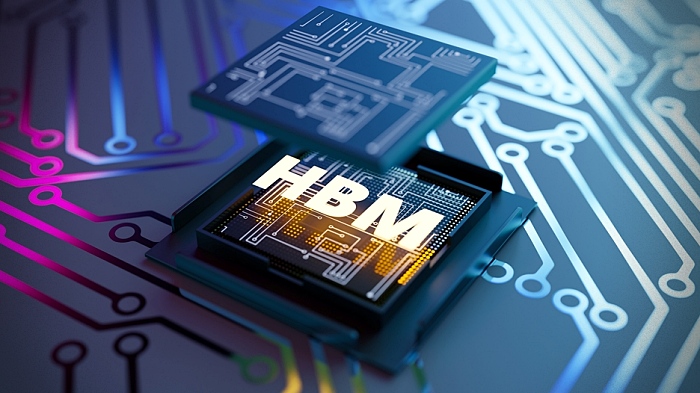
As artificial intelligence (AI) data centres expand, production of high-bandwidth memory (HBM) is being prioritised, reducing supplies of general-purpose DRAM and NAND flash used in smartphones and PCs.
IT outlet TechRadar reported on May 11 that the resulting pressure on memory supply and demand could affect device prices, specifications and the broader mobile ecosystem through 2027.
At the core is a shift in memory makers' production priorities. As major companies focus on expanding HBM output used in AI systems, supplies of general-purpose DRAM and NAND for smartphones and PCs are shrinking in relative terms. With chip plants having to allocate volumes across products within limited capacity, the more wafers are committed to AI memory, the less room there is to make memory for smartphones.
Tom Mainelli, an analyst at market research firm IDC, explained that as more wafers are allocated to HBM stacks for Nvidia GPUs, there is less capacity to produce memory for smartphones and laptops. He said AI systems depend heavily on memory as much as processors, and the amount of memory required is very large. As large language models (LLMs) must process vast amounts of data quickly, demand for high-performance, high-priced HBM is bound to grow, he added.
The industry is already feeling the supply imbalance. With memory demand for AI data centres rising quickly, smartphone makers are in a situation where they must adjust product specifications within more limited volumes than before.
Design priorities for devices are also shifting. In the past, the amount of RAM consumers wanted took precedence, but now the key variable is the cost range that manufacturers can bear.
Market analysts say smartphone component costs could rise by 15 percent or more. That could lead some mid-range models to reduce RAM, while entry-level devices could see overall specifications lowered, according to forecasts. Premium product lines could also stagnate rather than continue improving specifications as in past years. With PC makers already raising prices, the smartphone market is also likely to follow the same trend.
The issue is that this trend is not temporary. HBM is highly profitable, and makers' margins are bigger than for general DRAM. As a result, the shift in production is being seen as a structural change rather than a short-term response. Some in the industry also forecast that the memory shortage could continue through 2027. Even if factories are expanded, HBM involves complex stacking processes, making it difficult for increased output to take effect quickly.
Apple is not entirely spared either. It can absorb sharp price increases better than other companies through large-scale memory purchases and long-term contracts, but it still relies on the same memory supply chain. Smaller Android manufacturers, by contrast, have fewer options. They must raise prices or lower specifications, and there are also suggestions that they may forgo launching low-margin models.
Competition in mobile AI is also increasing the memory burden. Google is equipping Android with generative AI models, and Chinese companies are continuing experiments with on-device assistant features. Such functions require more RAM, faster chips and wider bandwidth. AI offers more convenient features, but there is a critique that the production of key components needed to run that AI is creating an "irony" by pushing up the price of devices.
The impact does not stop with manufacturers. App developers are also in a situation where they must adjust strategies to fit the changing environment. That is because the assumption that smartphone performance will naturally rise each year is being shaken, and some models could face limits on memory and storage.
As a result, the importance of cloud-based AI could grow further. On-device AI is an attractive option, but the cost burden is large, so many users may continue to rely on AI features processed on remote servers.
In this trend, platform dominance could also strengthen. Large companies with advantages in hardware and supply chains, like Apple, have relatively more capacity to endure, but smaller manufacturers could face greater pressure. As the AI boom reshapes the semiconductor production landscape, the smartphone market is entering a phase of restructuring that includes prices, specifications and service structures.
 Yoonseo Lee
yslee@d-today.co.kr
Yoonseo Lee
yslee@d-today.co.kr