
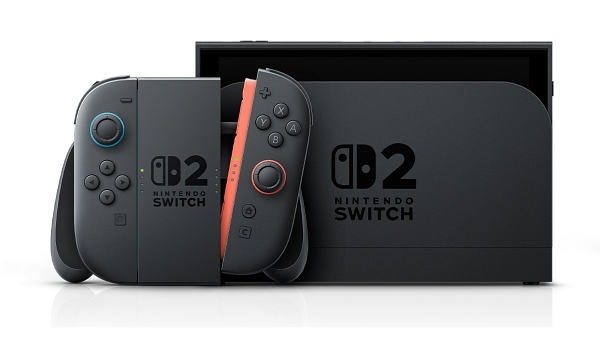
Nintendo's shares fell sharply after it announced a price increase for its next-generation Switch 2 console and a downward revision to its sales target, fuelling concerns about weak market conditions.
CNBC reported on May 11 local time that Nintendo shares in Tokyo ended down 8.4 percent at 7,020 yen (about 66,000 won) from the previous session. That was the lowest level since August 2024, and the stock is down 34 percent this year. Investors grew more concerned after seeing, at the same time, a forecast for declining console sales less than a year after launch and an announcement of a price increase.
The direct trigger for the market shock was the Switch 2 price increase. Nintendo said on May 8 it would raise Switch 2 prices across major markets worldwide. It cited a growing burden from higher production costs after memory chip prices surged amid a race to expand AI infrastructure.
The sales outlook released alongside the price increase also weighed on sentiment. Nintendo put its Switch 2 sales forecast for the current fiscal year at 16.5 million units. That is down from 19.86 million units recorded since its launch in June last year. New consoles often see wider adoption and rising sales in their second year after release, but Nintendo instead forecast weaker demand, delivering a shock to the market.
Serkan Toto, CEO of Kantan Games, said the price increase was a key factor behind weaker demand. He said it was unusual for sales of a new console to fall in the year after its launch. He added, however, that Nintendo has traditionally offered conservative earnings guidance, and the figure could have been set lower than the actual outcome.
Some in the financial investment industry also say Nintendo's outlook is overly conservative. Kazunori Ito, a director at Morningstar, said a price increase was inevitable with higher memory chip prices persisting for longer. He said consumers are likely to gradually adapt to the higher price and forecast actual sales at around 19 million units, above Nintendo's outlook.
A forecast of weaker software sales, as well as hardware, also fuelled investor anxiety. Nintendo projected annual game sales, including titles for the existing Switch and Switch 2, would fall 11 percent from a year earlier to about 165 million units. That was seen as a lack of confidence in its future game lineup and was received as a negative signal.
Some in the market, however, say the current share price is excessively undervalued. They argue attention should focus on long-term growth potential as more than 100 million existing Switch users move to the next-generation platform, rather than on short-term bad news. They also say the current forecast is too conservative because engagement in the console market tends to rise from the second year after launch.
Recent hit-game performance is also cited as supporting the possibility of a rebound. Pokemon Pocopia, released in March, sold more than 4 million copies in five weeks and became an unexpected success. The market is also watching the Nintendo Direct event scheduled for next month. Some forecast that investor sentiment could recover if Nintendo reveals its 2026 lineup of new titles based on core IP such as Mario and Zelda.
 Kyung-min Hong (홍경민)
hongm@d-today.co.kr
Kyung-min Hong (홍경민)
hongm@d-today.co.kr