
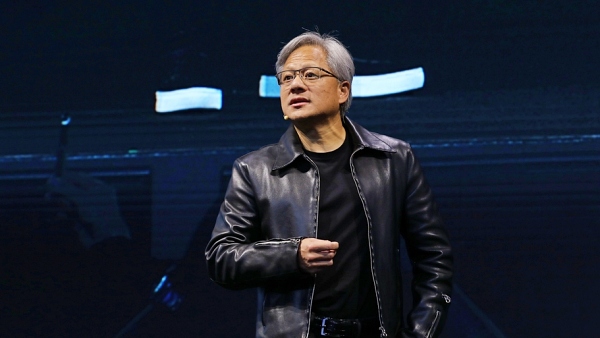
Nvidia Chief Executive Jensen Huang (황) said now is the best time for graduates to start their careers, even as artificial intelligence spreads and heightens job insecurity.
Business Insider reported on May 10 that Huang said in a commencement address at Carnegie Mellon University’s 2026 graduation ceremony that AI would have a net effect on society and the labor market.
Huang told graduates it was time to realize their dreams and that the timing could not be better. He said AI is narrowing the “technology gap,” opening an environment where anyone can make something useful. He said this would create many new opportunities for young talent over the next few years.
The remarks contrast with concerns in U.S. society that AI could reduce jobs. This year, at least 12 major companies, including Cloudflare and Snap, cited efficiency gains from AI as one reason behind layoffs. AI has also been cited as a factor that makes interview processes longer and raises barriers for new graduates seeking jobs. In early 2026, the unemployment rate for new graduates rose to its highest level in 4 years.
Public sentiment in the United States has also not been entirely favorable. In a Pew Research Center survey, about half of Americans said they felt more concerned than excited about the growing presence of AI in daily life. Opposition has also continued to building data centers that support AI services such as chatbots in local communities.
Warnings have also continued within the AI industry. Dario Amodei, an Nvidia CEO, warned last year that AI could eliminate 50 percent of entry-level white-collar jobs. Elon Musk also said in a February conversation with Joe Rogan that humanity faces a 20 percent chance of doom. Huang said such remarks fuel fear around AI.
Huang also said earlier this month on a podcast that AI industry leaders should be more cautious when describing the technology. At the time, he said, "These kinds of remarks are not helpful," and added that people should not act as if becoming a CEO means they know everything.
Huang’s message to Carnegie Mellon graduates was clear. He said, "It is unlikely that AI will replace you," while acknowledging labor-market anxiety. He said the more important variable is not AI itself, but the ability to use it. Huang said, "But someone who uses AI better than you can replace you."
Huang’s remarks came as technological optimism about AI collides head-on with job insecurity. With U.S. midterm elections ahead and the possibility being raised that AI regulation could emerge as a key issue in politics, the outlook is that big tech leaders will face greater pressure to manage their messages and explain their responsibility for the labor market.
 Yoonseo Lee
yslee@d-today.co.kr
Yoonseo Lee
yslee@d-today.co.kr