
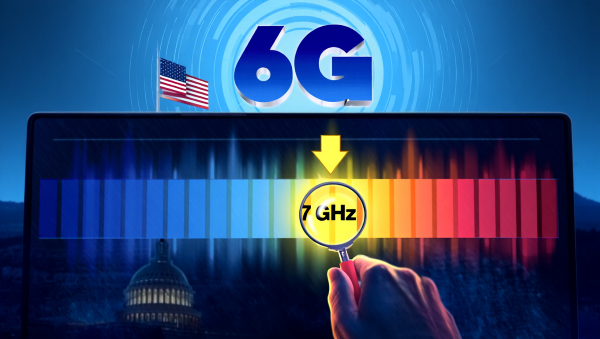
In the United States' process to select spectrum for 6G, the 7 gigahertz (GHz) band has emerged as the most likely candidate.
On May 9, IT outlet PhoneArena reported that the U.S. National Telecommunications and Information Administration (NTIA) is working to secure spectrum for 6G and that, among the bands under review, the 7 GHz band is at the most advanced stage.
NTIA opened a dedicated website this week to disclose the review status of each candidate band. Each band goes through 12 detailed tasks. The 7 GHz band is between steps 8 and 9, and the next procedure is an interference analysis. By contrast, the 4.4 GHz band has completed 3 tasks and is approaching step 4, while the 2.7 GHz and 1.6 GHz bands are at a level of preparing to enter step 5.
Government-level review is also becoming more concrete around the 7 GHz band. U.S. President Donald Trump (도널드 트럼프) signed a memorandum titled "Winning the 6G Race" in December last year, and NTIA was instructed to analyse the so-called lower 7 GHz band of 7.125 GHz to 7.4 GHz. Separately, the administration is also pursuing a plan to allocate 600 MHz of spectrum within the 1.3 GHz to 10 GHz range for exclusive licensing, and the possibility has also been raised that some federal government users may need to move to other bands between 7.4 GHz and 8.4 GHz. The focus on the 7 GHz band also carries symbolic significance because it aligns with the United States' strategic direction to secure leadership in 6G based on capabilities accumulated in 5G in technology, standardisation and artificial intelligence (AI) convergence.
In the industry, momentum is also continuing to view the 7 GHz band as a key 6G candidate. 5G Americas proposed using the 7 GHz band for 6G in a white paper in October 2024, and Nokia and Ericsson also stated the same position. About a year ago, T-Mobile received a waiver from the U.S. Federal Communications Commission (FCC) to test Nokia equipment in the 7 GHz band. At the time, T-Mobile said the test was "to support the advancement of future wireless technology", and an interpretation followed that viewed it as part of preparations for 6G.
NTIA chief Arielle Roth (아리엘 로스) referred to the direction of spectrum policy at the CTIA Summit on May 8. Roth said, "We can reconfigure and modernize and create more room," stressing the possibility of reallocating existing spectrum resources, and added that greater value is created the more efficiently spectrum is used.
Still, challenges remain in the form of budget and administrative procedures before the review can be completed. Roth explained that to execute the Spectrum Relocation Fund (SRF) to cover spectrum analysis costs, "submission of a detailed pipeline plan, review by a technical panel, approval by the director of the Office of Management and Budget, and a 60-day congressional notification period" are required. There are 54 days left for Congress until a decision on budget support for the 2.7 GHz band study, and procedures related to the 4 GHz band are also under way in parallel.
The policy timeline is relatively clear. NTIA's final report is due to be submitted in December, and the U.S. administration is known to be aiming to launch 3 models of 6G smartphones before the opening of the 2028 Summer Olympics. Still, some views say meeting that schedule will not be easy given the current pace of review.
The United States' 6G spectrum discussion is keeping multiple candidate bands open, but so far the 7 GHz band has entered the most concrete stage of review. Going forward, the results of interference analysis, plans to relocate federal users and whether funding can be secured are expected to act as key variables in finalising 6G spectrum.
 Seung-a Yoo
ysah@d-today.co.kr
Seung-a Yoo
ysah@d-today.co.kr