
Moves to commercialise semi-solid batteries in the electric bicycle industry are gaining momentum. While next-generation battery technology has remained at the proof-of-concept level, it has recently moved into the stage of being applied to products for sale, drawing attention to the possibility of a shift in the market landscape.
On May 8 local time, electric vehicle-focused outlet Electrek reported that Giant, one of the world’s largest bicycle makers, and U.S. electric bicycle brand Ride1Up are pushing to launch e-bikes equipped with semi-solid batteries.
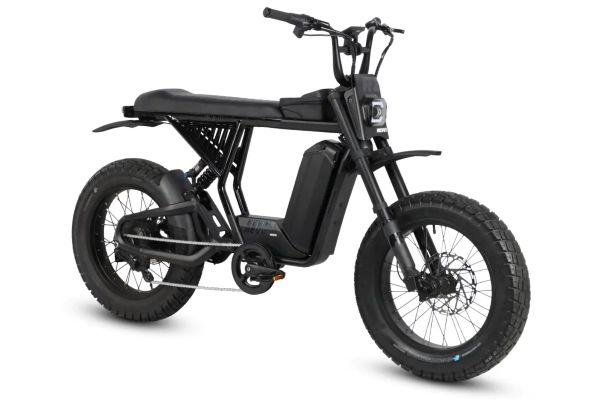
The key point is that this trend does not end with a simple technology announcement. Giant has begun integrating a semi-solid e-bike battery developed by Bafang affiliate T&D into its products, and California-based Ride1Up is preparing mass production of its moped-style e-bike Revv1 EVO with a semi-solid battery.
Ride1Up said the semi-solid battery for its first mass-produced batch is currently undergoing UL certification procedures at a TUV laboratory, and it is preparing production in line with an August delivery schedule. Electrek described it as “This time it looks real.” That means it is not at the prototype or concept level but is leading to commercial products from existing brands.
Semi-solid batteries are not fully solid-state batteries, but are seen as a technology that could improve thermal stability, lifespan, safety and low-temperature performance compared with existing lithium-ion batteries. The industry says the shift could be a meaningful turning point given that battery chemistry, a core component of e-bikes, has not changed much over the past 10 years.
From the user’s perspective, the most anticipated aspect is battery life. The industry is focusing on the possibility that battery replacement cycles could be extended significantly if semi-solid battery performance is proven as initially claimed. Battery replacement costs after several years of use are currently seen as a burden, but if lifespan increases by 2 to 3 times, it could be possible to use a single battery for close to 10 years.
The possibility of changes in charging patterns is also being discussed. If fast charging is supported without long-term degradation, it could become realistic to top up range with short charging sessions rather than relying on overnight charging as before. Improved winter riding performance is also cited as a factor for market expansion. If battery performance drops less in cold weather, e-bikes could become a year-round transport option rather than a seasonal means of mobility.
Improved safety is also a key variable. As concerns grow over battery fires involving e-bikes and electric scooters in urban areas, semi-solid batteries are seen as potentially reducing thermal runaway risk by lowering reliance on flammable liquid electrolytes. Electrek said it “targets most of today’s top complaints from e-bike users.”
A possible shift in competitive dynamics is also being raised. The e-bike market has so far competed around motor output, battery capacity and price, but if semi-solid battery performance is proven, competition could shift toward lifespan, safety and total cost of ownership. The industry sees the adoption of new battery chemistry technology as having a much higher barrier to entry than simply fitting a larger motor or battery.
This raises the possibility that a gap could widen between early adopters and latecomers. It is also mentioned that in the electric vehicle market, a pattern has repeated in which companies that first commercialised new battery technologies secured an advantage for a period before the technology spread as an industry standard.
Challenges still remain, though. The article points to the need for further verification of whether performance can be maintained for years in real road conditions, whether production scale can be expanded quickly and whether initially high prices can come down during the process of mass adoption.
Even so, the industry is treating the move as the starting point of a transition in e-bike battery technology. Electrek said, “The future is no longer coming. It is already here.”
 Jinju Hong
hongjj@d-today.co.kr
Jinju Hong
hongjj@d-today.co.kr