
[DigitalToday reporter Jinju Hong (홍진주)] Hyundai Motor has disclosed a patent for a body-on-frame battery structure for electric vehicles, stepping up preparations to target North America’s mid-size electric pickup market. The design aims to combine off-road performance, battery protection and cabin space, drawing attention to Hyundai’s next-generation pickup strategy.
Electrek reported on Wednesday that Hyundai recently disclosed a patent at the U.S. Patent and Trademark Office for a vehicle battery pack mounting structure. The patent covers an EV battery layout structure optimised for body-on-frame vehicles.
The key is integrating the battery into the inside of the vehicle frame. Frame side members running along both sides form the basic chassis, and the battery is arranged to overlap within the interior space. A separate battery case surrounds it on the outside. Hyundai is assessed as aiming to secure the high ground clearance needed for rough-road driving while lowering the vehicle’s centre of gravity.
Body-on-frame vehicles are generally used mainly for off-road vehicles and pickup trucks because they are durable and have strong towing performance. In electric vehicles, there has been criticism that the layout can be inefficient for large batteries. In the patent, Hyundai presented an approach of designing the frame and battery together to increase body rigidity and driving stability, while also strengthening battery protection in off-road environments.
The patent description also includes design elements to reduce the loss of cabin space. This is seen as reflecting that securing cargo space and passenger space is emerging as a key competitive factor as competition intensifies in the electric pickup market.
The industry views the patent as directly linked to Hyundai’s next-generation mid-size pickup truck under preparation. Hyundai has recently made official its plan to launch an authentic body-on-frame pickup aimed at the North American market.
Randy Parker (랜디 파커), CEO of Hyundai Motor North America, said at the New York auto show last month, "If we go body on frame, we enter a much more expanded area than the existing Santa Cruz." If the Hyundai Santa Cruz currently on sale is closer to a passenger-car-based lifestyle pickup, the next-generation model would mean targeting a more full-fledged off-road market.
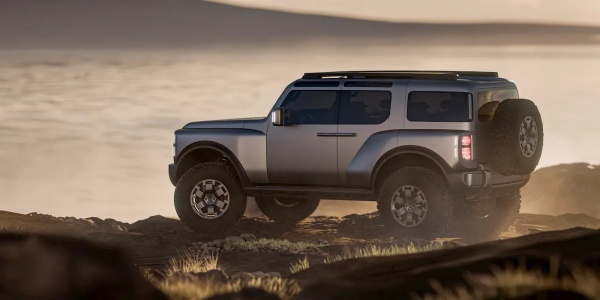
Hyundai also unveiled the Hyundai Boulder Concept, an off-road concept SUV, at the same event. The vehicle was introduced in a form equipped with 37-inch mud-terrain tyres, high minimum ground clearance, a roof rack and tow hooks. Lee Sang-yup (이상엽), head of Hyundai and Genesis Global Design Center, described it as "a four-wheeled love letter for customers who want an off-road lifestyle."
Hyundai is also being discussed as possibly developing the body-on-frame platform into a structure that can support not only pure electric vehicles but also hybrids, internal combustion engines and extended-range electric vehicles, or EREVs. This is interpreted as a strategy to respond flexibly to the pace of electrification and changes in market demand.
Production is also expected to focus on localisation in the United States. Hyundai is pushing a plan to produce the pickup in the United States using steel sheet supplied from an about $5.8 billion steel mill under construction in Louisiana. Hyundai Motor Group Metaplant America, or HMGMA, is said to be among sites being considered as a production base.
Battery capacity and powertrain specifications have not yet been disclosed. Hyundai is expected to release additional information as the launch date approaches. The mid-size body-on-frame pickup is one of 36 new models Hyundai said it would roll out in the North American market by 2030. Details to be unveiled, including specifications, platform configuration and whether a production site is finalised, remain key variables for gauging Hyundai’s strategy to target the U.S. pickup market.
 Jinju Hong
hongjj@d-today.co.kr
Jinju Hong
hongjj@d-today.co.kr