
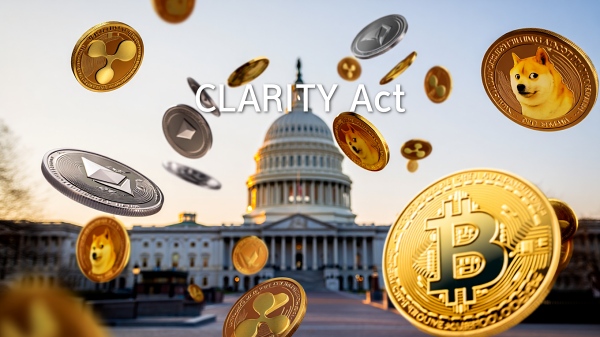
The White House has set July 4 as its target date to enact the CLARITY bill, a U.S. crypto market structure measure.
CoinPost, a blockchain media outlet, reported on May 7 that the U.S. Senate Banking Committee could begin voting procedures on the CLARITY bill as early as next week.
Patrick Witt (패트릭 위트), executive director of the President's Advisory Council on Digital Assets at the White House, said at the Consensus conference in Miami that the goal is July 4. He said passing the bill would be a "great birthday gift" ahead of the 250th anniversary of U.S. independence. Witt said that if the Senate advances the bill in June, the House of Representatives would have enough time afterward to handle its own revisions.
A stablecoin yield provision, a key variable in the legislative timeline, has recently advanced with the release of a compromise. The proposal would ban providing yield on simple deposit balances while allowing rewards linked to trading activity. Banking industry groups, however, are pushing back, saying the compromise does not go far enough.
Market participants are also placing weight on the likelihood the bill will be processed. Paul Grewal (폴 그레월), chief legal officer at Coinbase, expressed confidence at the same event that the CLARITY bill will be enacted within the summer. He urged banks to accept the compromise and move forward, saying, "Do not cling to defeat with victory in sight."
A rebuttal has also emerged to banks' concerns about deposit outflows. Grewal criticised what he called "zero evidence," saying that despite multiple meetings and conversations, banks have failed to provide substantive grounds supporting the claim. He also assessed the Tillis-Alsobrooks compromise as a workable middle ground because it preserves the core feature of rewards linked to trading activity.
The next issue, however, is an ethics provision. Democratic Senator Kirsten Gillibrand (커스틴 질리브랜드) said Democratic lawmakers will not vote in favour unless an ethics provision is included. The provision would restrict lawmakers, senior administration officials, the president and the vice president from using insider status to profit from the crypto industry.
Democrats' push for an ethics provision stems from crypto-related interests involving U.S. President Donald Trump’s family. Trump and Melania Trump issued meme coins before he took office, and the family is leading a DeFi and stablecoin project, World Liberty Financial (WLFI). Bloomberg estimated Trump’s crypto-related business income at at least $1.4 billion, and national security concerns were also raised over investments linked to the United Arab Emirates (UAE).
Witt said recent consultations with Democrats are going well and expressed optimism about reaching a compromise. He added that rules must apply equally to the president and to a first-term congressional intern, drawing a line by saying provisions targeting a specific individual or a specific office will not be adopted.
Gillibrand said she is also calling for consumer protection provisions that include anti-money laundering measures and efforts to prevent terrorist financing. The Senate Agriculture Committee has already advanced its own bill without Democratic support. The focus is now narrowing to whether bipartisan negotiations over an ethics provision can be concluded within the July 4 target deadline, and whether the Senate Banking Committee can begin formal amendment and voting procedures next week.
For the White House timeline to be realised, several steps must be completed within the next two months, including a Senate committee vote, securing 60 votes on the Senate floor, and coordination with the House. The stablecoin yield provision has cleared one hurdle, but the bill’s ultimate fate will hinge on ethics provisions and building bipartisan agreement.
 Yoonseo Lee
yslee@d-today.co.kr
Yoonseo Lee
yslee@d-today.co.kr