
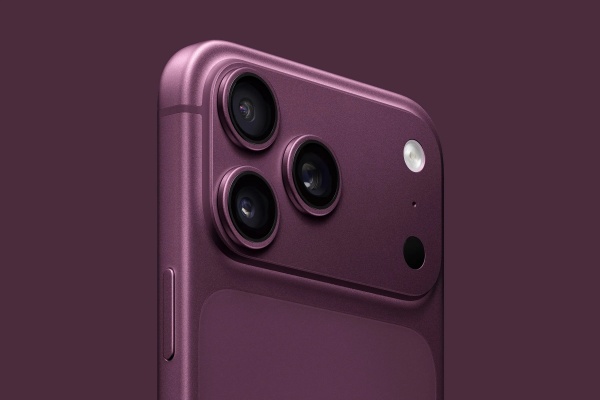
[DigitalToday Kyunmin Hong] Apple is expected to apply an aggressive pricing policy to its iPhone 18 Pro series due this fall, even as the industry faces headwinds from rising memory prices, to seek to expand market share.
On May 1, local time, IT outlet NineToFiveMac cited a latest report by analyst Jeff Pu and described Apple’s pricing strategy for its next flagship lineup, the iPhone 18 Pro and Pro Max.
The report said Apple is considering freezing the base-model price despite memory supply shortages and mounting cost pressures driven by a surge in artificial intelligence (AI) demand. This runs counter to Android manufacturers that are raising product prices or cutting back on low-end models, citing higher parts costs.
The global smartphone market is facing structural pressure from rising memory prices. In particular, the spread of AI technology is sharply increasing demand for high-performance memory, tightening supply and pushing prices up quickly. As a result, some Android manufacturers have raised prices on new products, and low-margin budget models could shrink in the market. The industry also sees the trend as potentially leading to a contraction in the overall Android market size.
Against this backdrop, Apple has chosen a strategy of keeping prices for its main models unchanged. Pu’s analysis said the iPhone 18 Pro is likely to start at $1,099 and the Pro Max at $1,199, maintaining the existing price range. That would be the same as the previous model. It is interpreted as a strategy to secure price competitiveness even if Apple accepts some margin decline to defend market share. The outlook also aligns with the views of major analysts including Ming-Chi Kuo.
Apple is also expected to pursue a two-track strategy that considers both price accessibility and profitability. It would keep base-model prices to lower the barrier to entry, while raising prices for higher-end models with larger storage capacity to offset profits. It has also been suggested that an ultra-premium iPhone 18 Ultra could be added, and the overall average selling price (ASP) is expected to rise.
Ultimately, Apple’s strategy aims to exploit weaknesses in the Android camp, which is under pressure to raise prices. While rivals face demand contraction from higher prices, Apple could keep prices relatively stable and expand user inflows. A recent rise in demand from Android users switching to iPhones has also been detected, raising the likelihood that Apple will strengthen its influence in the premium market through this strategy.
 Kyunmin Hong
hongm@d-today.co.kr
Kyunmin Hong
hongm@d-today.co.kr