
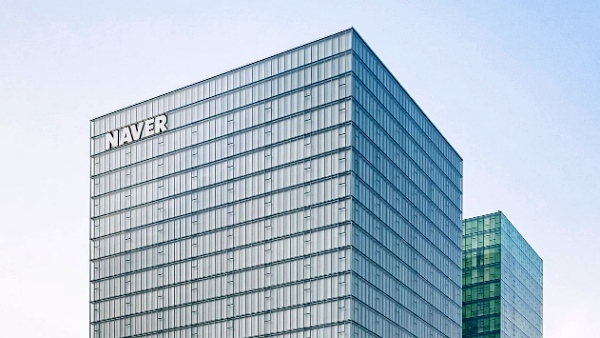
Naver has made a structural shift to connect search to transactions its key task this year. It plans to focus on building a seamless flow from search to purchases and reservations around what it calls “action AI”.
Naver said on Wednesday it posted first-quarter revenue of 3.2411 trillion won and operating profit of 541.8 billion won. That was up 16.3 percent and 7.2 percent, respectively, from a year earlier.
The operating margin was 16.7 percent. It said rising costs from expanded AI infrastructure investment and securing broadcasting rights for the Winter Olympics and League of Legends Champions Korea limited operating profit growth. Revenue by business segment was 1.8398 trillion won for Naver Platform, up 14.7 percent year on year, 459.7 billion won for Financial Platform, up 18.9 percent, and 941.6 billion won for Global Challenge, up 18.4 percent.
AI briefing long-tail queries grow 2.5 times; AI tab targets Q4 monetisation
Key indicators for AI Briefing continued solid growth in the first quarter. As of March, long-tail queries grew more than 2.5 times from a year earlier, and follow-up question clicks expanded more than 10 times from early after launch. The click-through rate for follow-up questions within AI Briefing was more than 2.5 times that of the general search recommendation area, as users actively use AI Briefing and expand the depth of exploration.
The monetisation timetable has also become more specific. It will begin testing generative AI ads combined with shopping and local services from the second quarter and move to full monetisation from the third quarter.
Naver CEO Choi Soo-yeon (최수연) said in a conference call held on Wednesday, “We will introduce it step by step starting with informational queries to minimise cannibalisation effects with existing search ads, while also improving profitability per unit of traffic.”
Naver’s own data show ad conversion rates can differ by up to almost 2 times depending on whether payment infrastructure is linked. It said an AI search structure that can track conversions through purchases and reservations serves as a basis to support more realistic ad pricing compared with existing search ads.
The AI tab, launched on April 27 for Naver Plus members, offers a conversational AI search experience that links personalised answers based on a user’s search and purchase history to purchase and reservation conversions within services. After opening it to all users, Naver will expand vertical categories in stages, including beauty, travel, health and property listings, and aims to introduce monetisation in the fourth quarter. Advertising revenue rose 9.3 percent year on year to 1.3945 trillion won, while AI’s contribution stayed above 50 percent, and the company will sequentially link with Criteo and Google in the second quarter to expand to external media.
Smart Store gross merchandise value grows 14%; unlimited free shipping for members in H2
Service revenue rose 35.6 percent from a year earlier to 445.3 billion won. Smart Store gross merchandise value increased 14 percent, marking a smooth start toward an annual double-digit growth target.
The Naver Plus Store app, marking its first anniversary, has been central to the growth. Longer time spent in the app and higher visit frequency translated into an 84 percent advantage in purchase conversion rates versus the web, and first-quarter app transaction value grew 28 percent from the previous quarter. The share of members among app buyers stayed above 80 percent, forming a virtuous cycle based on loyal users.
The shopping AI agent, officially launched at the end of February, is currently at the shopping guide stage. From May, it will be upgraded into a business agent by combining key assets such as membership benefits and delivery management to raise transaction conversions and profitability at the same time.
Strengthening delivery competitiveness is the top priority in this year’s commerce strategy. The transaction value growth rate for sellers that introduced N Delivery was 4 percentage points higher than for those that did not, and members’ order frequency rose more than 25 percent after delivery benefits were strengthened. Naver aims to reach 25 percent coverage this year and will introduce membership-linked unlimited free shipping in the second half.
Choi said the company is also reviewing a direct logistics investment model and added, “We will organically connect the app and AI, delivery and membership as a single growth engine to further solidify Naver commerce’s position.”
Offline expansion is also seen in this context. As generative AI spreads, the differentiating value of general-purpose data is weakening, while the value of proprietary data that is difficult to collect and replicate is rising quickly.
Naver’s plan to integrate online and offline data through Npay Connect is a step aimed at strengthening this data moat. It will use expanded place partnerships and links to external point-of-sale data to advance AI recommendations and CRM.
Choi said, “A structure in which Naver’s competitiveness built online extends offline will establish itself as a differentiated ecosystem that is not easy to follow.”
C2C revenue surges 57.7%; sovereign AI expands to India and Europe
If AI and commerce are internal growth drivers, C2C and sovereign AI are a second pillar supporting overall revenue growth. Revenue in the global challenge segment rose 18.4 percent from a year earlier to 941.6 billion won, led by a 57.7 percent surge in C2C revenue.
Poshmark achieved growth rates of about 30 percent year on year in both transaction value and revenue. Soda’s transaction value more than doubled from a year earlier on strong Japanese trading card performance and solid results at offline stores. Wallapop, newly consolidated this quarter, maintained the No. 1 C2C position in Spain with 23 million monthly active users. Content revenue fell 1.4 percent to 440.1 billion won.
Enterprise revenue rose 18.8 percent to 150.5 billion won. Line Works was selected in March as an official collaboration platform for the Ministry of the Interior and Safety, the Ministry of Science and ICT, and the Ministry of Food and Drug Safety. In the sovereign AI business, the company continued to expand services for a Saudi digital twin platform and signed a strategic memorandum of understanding with India’s largest IT services group, Tata Consulting Services (TCS). It is also in talks with multiple countries in Europe.
Infrastructure costs rise 32.5%; net profit falls 31.3% on FX losses
On the cost side, expanded infrastructure investment pressured profitability. Infrastructure costs rose 32.5 percent from a year earlier due to increased acquisition of new computing assets such as GPUs, and about 18.0 billion won was recognised in the first quarter for broadcasting-rights-related costs alone.
CFO Kim Hee-cheol (김희철) said, “We have already confirmed the effect, such as reducing actual GPU usage by around 30 percent versus expectations through strategic GPU allocation and introducing an enterprise-wide efficiency platform.” He added, “We will closely review the scale of investment, considering AI monetisation contributions and market conditions.”
Net profit fell 31.3 percent from a year earlier to 291.0 billion won due to foreign exchange losses and increased losses on investments in associates. Free cash flow fell 152.1 billion won to 319.8 billion won due to higher capital expenditure. A year-end dividend of 393.6 billion won was paid on April 14. The expansion in first-quarter costs reflects upfront investment to build AI infrastructure and secure content, and whether a payback structure becomes visible from the second half as AI ad monetisation ramps up is expected to be a key turning point this year.
 Lee Ho-jung
lhj@d-today.co.kr
Lee Ho-jung
lhj@d-today.co.kr