
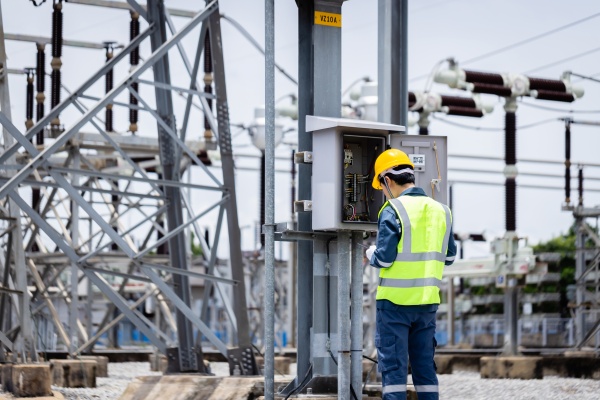
As competition to expand artificial intelligence (AI) data centers accelerates, low-voltage technicians who install and maintain fiber optic cables and server equipment are emerging as key on-site workers in the AI era. Big Tech companies such as Meta and Amazon are also rolling out training programs as they compete to secure workers.
Business Insider reported on April 27 that Meta recently unveiled the Level Up Fiber Technician Pathway program to train technicians to be deployed at data center construction sites.
The course runs free for 4 weeks, and graduates are offered interview opportunities related to Meta data center construction projects. Meta explained that demand for data center construction is surging, but there is a shortage of skilled workers to handle it.
Jobs seeing rising demand on site are often called fiber optic technicians or data center technicians, but the actual work is closer to an extension of the traditional low-voltage technician trade. Low-voltage technicians install and maintain low-voltage electrical facilities such as security systems and audio and video equipment. Some workers then specialise in fiber optics, a core area for the internet and AI infrastructure.
Industry estimates of the labour shortfall are also large. A report published last year by the Fiber Broadband Association and the Power and Communication Contractors Association estimated that about 200,000 additional fiber optic technicians will be needed to support the expansion of the AI economy. It said the construction boom for data centers, combined with the ageing and retirement of existing technical workers, is worsening the shortage.
Cesar Ruiz (세자르 루이즈), chief executive of workforce development organisation Learning Alliance Corp, said, "In the end, the core work is installing cables." He said the difference is the added task of connecting fiber optic cables inside a data center to racks, switches and routers.
The move is not limited to Meta. Amazon has also backed fiber optic technician training programs in areas where its data centers are located, such as Ohio and Virginia.
Industry participants also see a marketing effect behind companies increasingly using the term "fiber optic technician" rather than "low-voltage technician". Ruiz said companies actively use the term in hiring and training promotions because the word "fiber optic" sounds more like a future industry.
Some analysis also suggests it is still uncertain whether the data center construction boom will lead to long-term employment growth. Ruiz said fiber optic technician jobs at data center construction sites typically last up to about 2 years, and many workers then move to other project sites. He added that once a data center is completed and enters the operational stage, the size of the permanent workforce needed for maintenance is likely to remain at no more than one quarter of the construction-stage level.
As a result, some see current AI-driven demand as closer to project-based construction staffing than long-term operations staffing. Attention is also turning to shifts in the technical job market, as the race to secure wiring and installation workers is spreading beyond semiconductors and servers as AI investment expands.
 Jinju Hong
hongjj@d-today.co.kr
Jinju Hong
hongjj@d-today.co.kr