
[Digital Today reporter Ji-young Lee] Payment fees charged by electronic financial service providers fell slightly, but competition among operators to cut fee rates remains limited. Major simple payment providers showed differences in fee rates for micro merchants.
According to an electronic financial service provider payment-fee disclosure released by the Financial Supervisory Service on April 28, the average payment fee rate for 18 providers from September last year to February this year was 1.98 percent for card payments and 1.74 percent for prepaid. Based on the existing group of 11 companies previously subject to disclosure, the card fee rate fell 0.01 percentage point to 2.02 percent from 2.03 percent, and the prepaid fee rate fell 0.07 percentage point to 1.78 percent from 1.85 percent.
This disclosure is the first tally since the number of companies subject to disclosure expanded from 11 to 18. It includes specialised payment gateway operators, dual payment gateway and prepaid operators, shopping mall-type operators and delivery platform-type operators such as Toss Payments, Naver Financial, Kakao Pay, KG Inicis, 11st, Gmarket, Coupang Pay and Woowa Brothers.
Despite the expansion, the trend in fees did not change much from before. Financial authorities introduced payment-fee disclosures in 2023 to let merchants compare fees by provider and to encourage voluntary competition to cut rates.
The slight decline in fee rates in this disclosure appears to show that market discipline from the expanded disclosure has worked to some extent. The drop was not large. In particular, card fees continued to be structured to apply different rates based on merchant sales, rather than showing large differences by provider type. It applies lower fee rates to micro merchants with annual sales of 300 million won or less.
Against this backdrop, differences among providers are becoming clear in the micro-merchant segment.
Among major simple payment firms, Kakao Pay applied a card fee rate of 0.38 percent for micro merchants, keeping the lowest level again among the three major simple payment providers, Naver Pay, Kakao Pay and Toss. It consists of 0.30 percent for externally collected fees and 0.08 percent for self-collected fees. It remained the lowest among the three even though the rate rose 0.18 percentage point from the previous disclosure.
A Kakao Pay official said, "Unlike the previous six-month main disclosure, the calculation period for the last disclosure was a shorter three months, while the holiday promotion period, which is a factor lowering fee rates, was longer, creating a base effect that lowered the rate." The official added, "On a six-month main disclosure basis, payment fee rates are instead generally declining." The official also said, "We have been consistently working to cut rates to ease the burden on small business owners."
Kakao Pay is also continuing a structure that effectively gives up margins in prepaid payments (Kakao Pay Money) by applying a self-collected rate of minus 0.41 percent.
By contrast, Viva Republica, which operates Toss, applied a micro-merchant card fee rate of 0.79 percent. That rose somewhat, by 0.37 percentage point, from the previous disclosure.
Naver Financial (Naver Pay) applied 0.81 percent for micro merchants, the highest among the three. It made a slight cut of 0.01 percentage point from the previous disclosure, but its self-collected fee rate of 0.45 percent is also relatively high.
A Naver Pay official said, "The disclosure includes both online and offline merchants and transactions through payment gateway firms," adding, "Because Naver Pay has a structure with a high proportion of online transactions, the average fee rate can appear relatively high."
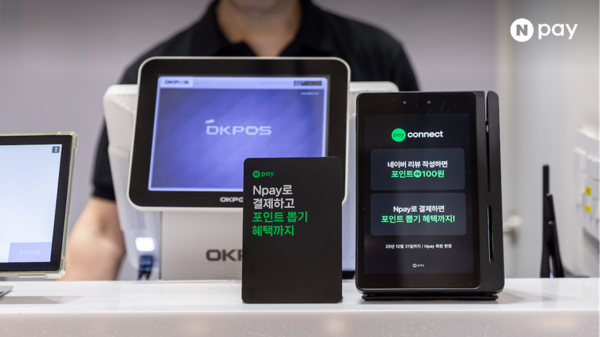
Separately, Naver Pay is also providing support to ease the burden on micro merchants. From May 4 to 10, it decided to support fees for online and offline micro merchants that use Naver Pay (Npay) payments. It will pay the full amount of fees incurred during the period in June.
An industry official said, "Not much time has passed since the disclosure expansion took effect, so both authorities and the industry are in the process of adapting in practical terms," adding, "As it is an early stage, there is also an atmosphere where some confusion is appearing."
Meanwhile, the Financial Supervisory Service will expand the scope of payment-fee disclosure in stages to include those with monthly payment volumes of 500 billion won or more in 2026, 200 billion won or more in 2027, and all operators in 2028. It also plans to apply institutional pressure in parallel, such as strengthening fee notifications through a task force with the industry and encouraging measures to ease the burden on small business owners.
The Financial Supervisory Service said, "Market discipline through the disclosure system worked to some extent, including a slight decline in payment fees," adding, "We will push for expanded disclosure and stronger regulation of the payment gateway business and increase transparency and comparability of payment fees with the industry."
 Ji-young Lee
ljy@d-today.co.kr
Ji-young Lee
ljy@d-today.co.kr