
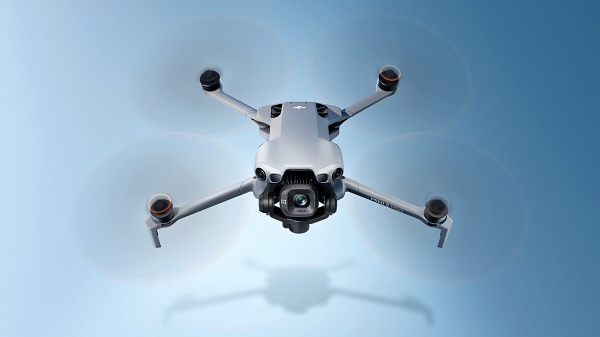
[DigitalToday reporter Jinju Hong] Competition between Shenzhen-based hardware companies DJI and Insta360 is spreading beyond drones and 360-degree cameras to vlogging devices, emerging as a key variable in the global smart imaging market.
The Hong Kong-based South China Morning Post reported on April 24 that the head-to-head contest is expanding on multiple fronts, including broader product lines, pricing strategy, talent recruitment and patent lawsuits, affecting U.S. rivals and the wider global market.
The starting point of the latest competition is Insta360's entry into the drone market. Insta360 entered the 360-degree drone market in July last year through its independent brand Antigravity. DJI responded with a panoramic video camera, as the two moved into a direct face-off by targeting each other's core areas.
DJI still has a clear edge in market share. In the civilian drone market, DJI holds about 70 percent of global market share. Antigravity's A1 drone, developed by Insta360, logged sales of 30 million yuan in the first 48 hours after launch and exceeded 30,000 units in global shipments in its first month, succeeding in an early box-office run. The industry, however, says those results alone are unlikely to shake DJI's dominance in the short term.
The situation is reversed in the 360-degree camera market. DJI's Osmo 360 posted a 35 percent quarterly share, but Insta360 maintained the top spot with a 65 percent annual share. Experts say both companies' products have significant room for technical improvement, and the outcome will ultimately depend on product competitiveness.
Some analysis says the rivalry will not necessarily end in a zero-sum result. It says rapid product upgrades are creating new demand and price competition is driving market expansion. The industry describes it as a typical case of high-intensity competition that grows the sector.
U.S. regulation is a shared variable for both companies. The U.S. Federal Communications Commission has included foreign-made drones and parts in its regulatory scope on national security grounds, effectively limiting sales of new DJI products in the United States. DJI has filed a lawsuit in protest. Insta360 is also closely watching policy shifts, as some of its products could become subject to the rules.
The uncertainty is also affecting new product launches. DJI's recently unveiled camera for vlogging is not yet being sold in the U.S. market, and Insta360 is preparing to launch a new handheld camera, Luna, jointly developed with Leica.
DJI's lead continues in the handheld smart camera market. DJI ranked first in 2025 with a 62 percent share, and shipments rose sharply from a year earlier. Insta360 followed with a 20 percent share, while GoPro's share fell to 11 percent as shipments declined. GoPro also recently announced a restructuring plan.
In China, some say the competition is driving broader industry growth. As drone registrations surge, new categories such as 360-degree drones are expanding the existing market, the analysis says.
As the rivalry intensifies, legal disputes have also begun in earnest. DJI has filed a patent infringement lawsuit against Insta360 over drone technology, and some expect the outcome could affect Insta360's global business. Insta360 is also engaged in a design dispute with GoPro in the United States.
DJI founder Tao Wang (왕 타오) said in a recent interview that "competition is not a fight to bring the other side down, but a race to run faster." Some say the companies' rivalry is moving beyond a simple fight for market share and is leading toward an expansion of the overall drone and smart camera markets.
 Jinju Hong
hongjj@d-today.co.kr
Jinju Hong
hongjj@d-today.co.kr