
[Digital Today reporter Yoonseo Lee] Coinbase publicly pressured the U.S. Congress to clearly state whether it will allow stablecoin rewards.
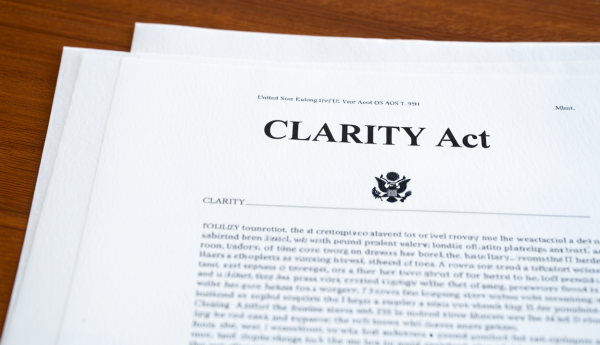
On April 21 (local time), blockchain outlet BeInCrypto reported that Coinbase Chief Legal Officer Paul Grewal (폴 그레월) argued that lawmakers who support the CLARITY Act must also oppose a proposal to ban stablecoin rewards.
In a post on X, formerly Twitter, Grewal framed lawmakers’ options as binary. “You can’t be for CLARITY and against rewards. It’s one or the other,” he wrote. “Time to choose,” he added. He raised the level of his public remarks as Senate negotiations over stablecoin revenue models head toward the final stage.
The issue is the Senate compromise. A draft prepared by Thom Tillis and Angela Alsobrooks is designed to ban passive yield on stablecoin balances, while allowing only limited activity-based rewards tied to payments, remittances or platform use. Banking groups are calling for even tighter regulation. They say allowing rewards on idle funds could lead to withdrawals from traditional bank deposits.
Coinbase has repeatedly rebutted that argument. Grewal criticised the concern about deposit outflows as merely a “theoretical claim” not proven by data. A recent White House Council of Economic Advisers report presented figures with a similar point. The report said that even if stablecoin returns were banned, the effect of increased bank lending would be limited to 0.02 percent.
The dispute is also directly linked to Coinbase’s results. Bloomberg Intelligence said stablecoin-related revenue accounted for about 19 percent of Coinbase’s 2025 sales. That means the final bill language could affect the revenue structure not only of Coinbase but also of major rival exchanges.
The legislative schedule is also tight. Senator Cynthia Lummis warned that if the bill is not passed before the midterm elections, it could be pushed back to 2030. The Senate Banking Committee removed the bill from its April 20 agenda, a decision that heightened concerns that the time available to pass it is shrinking quickly.
In this situation, Grewal’s comments are seen as a message that raises the political burden on lawmakers who are holding back. The current compromise seeks a middle ground between the banking sector’s demand for strong restrictions and the activity-based rewards the crypto industry sees as a minimum standard. The crypto industry says even these activity-based rewards should not be rolled back.
The key ahead is whether this minimum permitted scope is maintained during the Senate committee review process. It is expected that only if activity-based rewards survive will it be possible to gauge whether the CLARITY Act can pass the Senate in 2026.
You can’t be for CLARITY and against rewards. It’s one or the other. Time to choose.
 Yoonseo Lee
yslee@d-today.co.kr
Yoonseo Lee
yslee@d-today.co.kr