
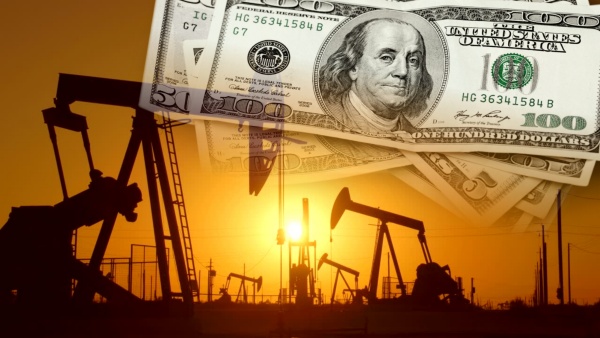
[DigitalToday reporter Jinju Hong (홍진주)] The petrodollar system is being shaken by the fallout from the U.S.-Iran war. Petrodollars refer to U.S. dollars received by oil-producing countries in return for crude exports, and more broadly to a settlement structure in which international oil trade is centred on the dollar. Recently, signs of cracks have emerged in that structure.
According to blockchain media outlet BeInCrypto on April 20 local time, the pressure intensified as war risk in the Gulf region spilled into financial markets. The Wall Street Journal said the United Arab Emirates (UAE) discussed with the United States the possibility of building a financial safety net as the risk of a clash with Iran grew. Khaled Mohamed Balama, governor of the UAE central bank, was reported to have met U.S. Treasury Secretary Scott Bessent and Federal Reserve officials in Washington and raised the possibility of a currency swap line.
Behind the talks are disruptions to energy infrastructure and restrictions on exports through the Strait of Hormuz. If crude exports are blocked, dollar inflows could also fall. The UAE has not made an official request, but conveyed to the U.S. side a perception that it has been "drawn into a destructive conflict and its fallout may not be over."
The key is the possibility of a dollar shortage. UAE officials said that if dollars run short, they may have to use China’s yuan or other countries’ currencies for crude sales and other transactions. This is seen as direct pressure on the dollar, which has effectively enjoyed a near-monopoly position in oil trade.
In fact, some moves toward alternative settlement have already appeared. Iran was reported to have imposed yuan-denominated passage fees on merchant ships passing through the Strait of Hormuz in early April. Al Jazeera, citing Lloyd’s List, reported that as of March 25 at least 2 vessels had paid costs in yuan. It is unclear how large the payments are, but non-dollar settlement becoming a reality in a key corridor for maritime transport and energy logistics is a notable development.
Iran went further and also hinted at using digital assets. Tehran has reviewed even a plan to impose bitcoin-based tanker passage fees as part of efforts to bypass the traditional financial network. The outlet pointed to this as a move in a trend toward evading sanctions and expanding non-traditional payment channels.
Such changes are not solely a product of war. Deutsche Bank viewed U.S. sanctions on Russian and Iranian crude exports as having already expanded parallel trade networks, increasing reliance on non-dollar currencies such as the yuan in the process. It means structural pressure on the petrodollar system has also accumulated as more trade takes place outside the existing dollar-centred settlement network.
Markets have also continued to issue warnings about the dollar’s long-term status. Bridgewater founder Ray Dalio warned that if the Strait of Hormuz cannot be secured in a stable way, risks to the dollar’s status as a key reserve currency could rise sharply. Balaji Srinivasan also argued that an Iranian victory could accelerate the end of several geopolitical and financial orders, including the petrodollar system.
Prospects for the rise of the yuan are also being discussed. Harvard economist Kenneth Rogoff forecast that the yuan could rise as a global reserve currency within the next 5 years, saying investors’ demand to diversify away from the dollar is growing. It does not mean the dollar system will be replaced in the short term, but it is interpreted as a signal that the foundation of dollar demand formed through oil trade could weaken compared with the past.
Still, near-term market moves are continuing to support the dollar. After the United States and Iran announced a ceasefire, the dollar index fell by nearly 2 percent from April 7 to 15, but oil prices rebounded as uncertainty over the war grew again, reviving the petrodollar effect. While geopolitical tension sustains demand for dollars, yuan settlement and the expansion of parallel trade networks are becoming long-term variables beneath the surface.
 Jinju Hong
hongjj@d-today.co.kr
Jinju Hong
hongjj@d-today.co.kr