
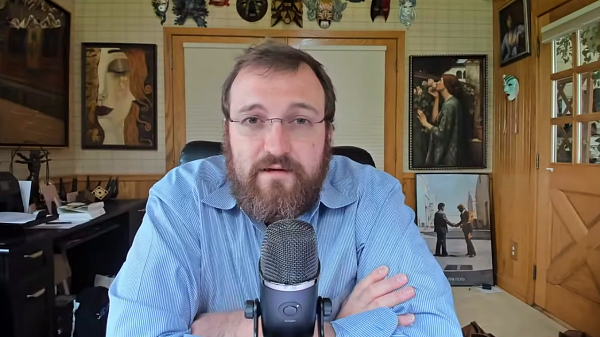
[DigitalToday reporter Jinju Hong] Cardano (ADA) founder Charles Hoskinson strongly criticised a quantum-computing response plan proposed by Bitcoin (BTC) developers, saying it would effectively amount to a hard fork. He pointed to the inability to protect early Bitcoin, including coins believed to belong to Satoshi Nakamoto, as the core problem.
According to blockchain media outlet Cryptopolitan on April 16 (local time), the dispute was triggered by 'BIP-361' proposed by Bitcoin core developers. The proposal calls for gradually freezing funds in addresses that could be vulnerable to quantum attacks and recovering them through a new method.
The basic structure is to reclaim frozen funds using a zero-knowledge proof linked to a BIP-39-based seed phrase. It envisions gradually retiring the existing address system and shifting to a safer structure.
Hoskinson argued this structure cannot be implemented as a simple soft fork. Because it would invalidate the signature system used by existing users, it would fundamentally change the network's rules and ultimately require a hard fork, he said. He also stressed that the Bitcoin community has long been reluctant to pursue hard forks on the grounds of network immutability.
The dispute is not limited to the upgrade method. Hoskinson said the proposal cannot protect the oldest Bitcoin assets. He cited the fact that BIP-39, presented as a recovery condition, was introduced in 2013. Bitcoin created before then cannot prove ownership through that method.
He explained that about 1.7 million BTC were created before BIP-39 was introduced, and about 1 million BTC of that amount is believed to be Satoshi Nakamoto's early mined holdings. Because early wallets used local key generation rather than seed phrases, he argued those assets cannot be recovered under the proposed structure and could be permanently frozen.
Bitcoin Core developer Jameson Lopp, a co-proposer of BIP-361, acknowledged some limitations. He described the proposal as "an idea for emergency situations, not a final specification," and said he hoped it would not lead to actual adoption.
Still, Lopp maintained that freezing coins in advance is better than a scenario in which long-inactive bitcoin enter circulation in large volumes due to a quantum attack. He estimated bitcoin currently in a dormant state totals about 5.6 million BTC.
The dispute appears to be spreading into a governance issue beyond technology. Hoskinson said Bitcoin lacks a formal on-chain decision-making structure, making it difficult to systematically decide such sensitive upgrades. He argued an informal, developer-driven consensus structure makes it hard to resolve a clash between quantum security and network immutability.
As a result, debate over BIP-361 is expanding beyond a simple security patch into a fundamental question of how Bitcoin changes its rules and whose assets it will protect. In particular, if early bitcoin including Satoshi holdings are excluded from protection, the possibility is being raised that the security model itself for the quantum era may need to be redesigned.
 Jinju Hong
hongjj@d-today.co.kr
Jinju Hong
hongjj@d-today.co.kr