
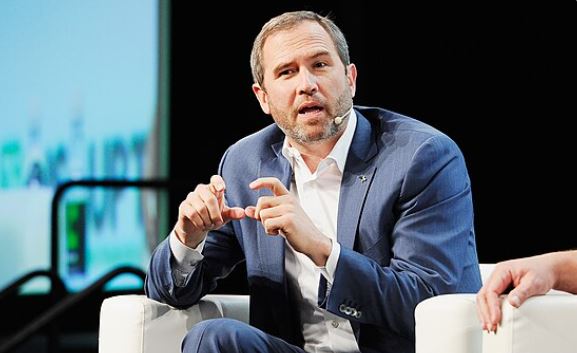
Brad Garlinghouse (브래드 갈링하우스), Ripple chief executive officer, said the U.S. cryptocurrency industry is closer than ever to regulatory clarity through legislation to clarify the market structure for digital assets, known as the CLARITY Act. He added that he is less confident than before about prospects for the bill to be passed in April.
The Crypto Basic, a blockchain media outlet, reported on Tuesday that Garlinghouse assessed that the CLARITY Act being pursued by the U.S. Congress could for the first time establish a comprehensive regulatory framework for digital assets.
Marking his 11th anniversary at Ripple, he looked back on the company’s regulatory response and said the mood in Washington had changed. After meetings with key lawmakers including Bill Hagerty and Patrick McHenry, he said the industry was closer than ever to securing clear rules. He judged that long-running calls for institutional reform could translate into results.
The CLARITY Act is central. The bill focuses on how to classify digital assets and which agencies would oversee them. Garlinghouse said, "The window to advance meaningful legislation is open," but added, "This opportunity may not last long," stressing that the industry should not lose its current momentum.
He also pointed to the U.S. Securities and Exchange Commission and the Commodity Futures Trading Commission recently issuing joint guidance. The two agencies for the first time presented an official framework under federal law for classifying digital assets, and in the process classified XRP as a digital commodity. Garlinghouse saw such cooperation as a possible signal that "years of regulatory hostility" toward the crypto industry could be ending.
He also made clear that coordination among regulators alone is not enough. Without legislation by Congress, he warned, a tougher enforcement stance could return when the SEC chair changes. He judged that classification and oversight principles for digital assets must be set in law so the regulatory direction does not sway with changes in administrations or personnel.
On the bill’s timeline, he took a more cautious stance than before. As recently as February, Garlinghouse saw an 80 percent chance the bill would be enacted by April, but he said his confidence in that schedule has now declined. The pace has slowed as disagreements persist over contested provisions.
The biggest obstacle is regulation on providing returns for stablecoins. Some crypto companies, including Coinbase, have opposed restrictions that would prevent issuers from offering returns to users. They argued the regulation would work in favour of traditional banks, and the continued conflict led the U.S. Senate Banking Committee to postpone deliberations that had been scheduled for January.
For now, there is talk that deliberations could reopen at the end of this month. The schedule has not been confirmed. In the industry, there is also speculation that crypto companies and banking executives have moved closer to a compromise over stablecoin returns. Garlinghouse also said negotiations may be nearing a breakthrough, and he saw fatigue among lawmakers and the broader industry as a factor that could push a deal forward.
In this flow, the CLARITY Act is emerging as a testbed for setting standards for the U.S. digital asset regulatory system, beyond being a long-held industry goal. Whether the deliberation schedule is confirmed and whether a compromise is reached over stablecoin return regulations is expected to be the key variable for passage of the bill.
Yesterday, I celebrated 11 years at Ripple. Back then, I couldn’t have predicted that we’d still be fighting for regulatory clarity. The fight has been worth it. After a day in DC having great conversations with @SenatorHagerty, @berniemoreno, @SenatorTimScott, @JohnBoozman and… https://t.co/YGM7KKoMT0 pic.twitter.com/zAmBr6hIyX
 Yoonseo Lee
yslee@d-today.co.kr
Yoonseo Lee
yslee@d-today.co.kr