
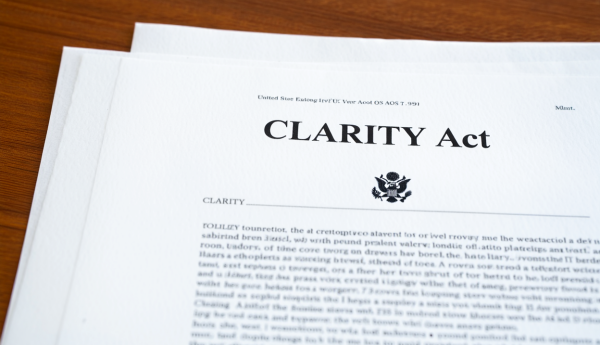
Republican Senator Thom Tillis is pushing to release a draft of the CLARITY bill this week aimed at settling controversy over stablecoin interest payments.
On April 14, The Block Crypto reported that Tillis is coordinating the wording with Democratic Senator Angela Alsobrooks (안젤라 올스브룩스).
The dispute centers on whether crypto firms can pay interest on users' idle stablecoin balances. Tillis said of the current draft that the language is "pretty well organized" and that it could be released later this week if talks proceed smoothly. The wording has already been reviewed jointly by banking and crypto industry officials, the report said.
Banks have objected. The specific source of the criticism was not confirmed, but Tillis left open the possibility of further changes.
The stablecoin compensation issue is seen as the sharpest point of contention in the CLARITY bill, which seeks to set rules for the broader digital asset industry. The GENIUS Act, passed last year, bans stablecoin issuers from directly paying interest. It does not block third-party platforms such as exchanges from offering yields, leaving a regulatory gap.
Banks have argued that allowing such compensation could trigger a large outflow of deposits from traditional finance and create a structural shock to the financial system. The crypto industry, including Coinbase, has countered that blocking interest payments would curb innovation. The industry has said the system could create new business opportunities not only for crypto firms but also for banks, and the sides remain sharply divided.
The White House has held several closed-door meetings since the start of the year to try to broker a compromise, but no agreement has been reached. Banks and the crypto industry have maintained their existing positions. Against that backdrop, Tillis was reported to have mentioned the possibility of bringing both sides to Congress to discuss stablecoin interest in a meeting format dubbed a "Crypto Palooza."
Even if a compromise is released, the path to legislation remains long. The CLARITY bill has not yet gone to a vote in the Senate Banking Committee, and it must then go through a bill-coordination process with the Senate Agriculture Committee. Only then can it move to a vote on the Senate floor.
As a result, the draft can be seen as an interim step to narrow the biggest point of conflict rather than a final conclusion on stablecoin regulation. Whether talks lead to an actual agreement, and how much the language changes during the congressional review process, are expected to be the key points to watch for now.
 Yoonseo Lee
yslee@d-today.co.kr
Yoonseo Lee
yslee@d-today.co.kr