
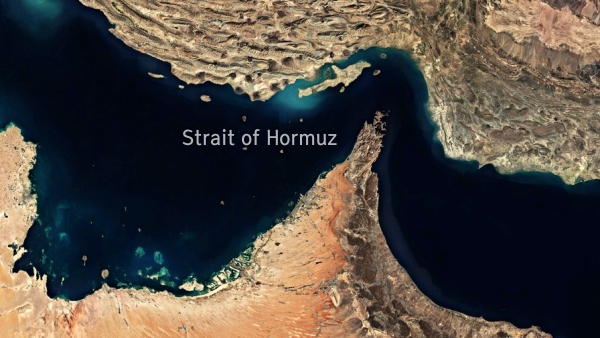
A report that Iran could take Bitcoin for tolls charged to oil tankers transiting the Strait of Hormuz has fuelled a growing debate over the actual payment method and technical feasibility, Cointelegraph reported on Thursday.
The controversy spread after a Financial Times report that the Iranian government was considering Bitcoin payments to avoid U.S. sanctions.
The Strait of Hormuz is a key shipping lane through which about 20 percent of global crude oil supply passes. That has prompted arguments that if Iran introduces Bitcoin payments, it could serve as a test case of whether Bitcoin can be used as a neutral payment network for international transactions.
Information on the payment method remains mixed. Alex Thorn of crypto investment firm Galaxy said several subsequent reports suggest tolls could be paid in a stablecoin or in China’s yuan. Thorn said he is monitoring on-chain activity to see whether there are signs of Bitcoin toll payments.
Bitcoin supporter Justin Bechler argued that Iran is unlikely to adopt U.S. dollar-based stablecoins as a toll payment method. He cited that issuers can freeze assets and that compliance mechanisms also apply under the GENIUS stablecoin regulatory framework. He said Bitcoin has no issuer, no compliance officer to pressure and no freezing function.
Technical feasibility is also at issue. Thorn estimated the Hormuz toll per oil tanker would be about $200,000 to $2 million. In earlier reporting, a spokesperson for Iran’s oil, gas and petrochemical products exporters' union said it would take only seconds for a vessel to complete payment in Bitcoin.
If that is the case, it raises the possibility of using the Lightning Network, Bitcoin’s second-layer payment network. The Lightning Network can process transactions in seconds without waiting for block confirmation that takes about 10 minutes. Thorn noted, however, that the largest Lightning Network transaction known so far is about $1 million.
Thorn said it is more likely that Iranian authorities would approve a passage request and then provide a vessel with a Bitcoin address in the form of a QR code or an alphanumeric string.
The matter has drawn attention because Bitcoin has been mentioned as a means of payment in conflict and sanctions environments, beyond being a speculative asset. At the same time, ongoing discussions around banks, lending and stablecoins have shown blockchain technology expanding across financial infrastructure.
 Hyunwoo Choo
cookinpapa@d-today.co.kr
Hyunwoo Choo
cookinpapa@d-today.co.kr