
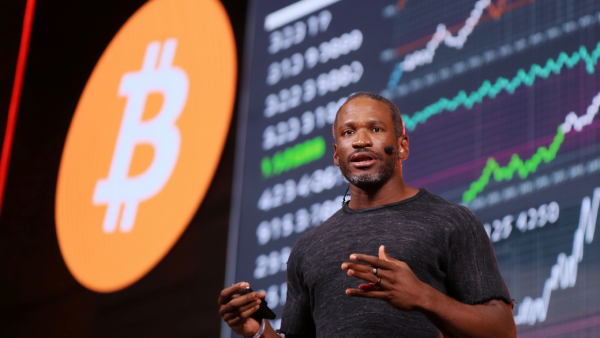
Arthur Hayes, a BitMEX co-founder, has publicly raised doubts over claims that Iran is imposing bitcoin tolls in the Strait of Hormuz.
On April 9, blockchain media outlet BeInCrypto reported that Hayes said he would find it hard to believe the claim until bitcoin transactions linked to toll payments are confirmed.
The controversy began with claims that Iran is charging oil tankers passing through the Strait of Hormuz a toll of about $1 per barrel and collecting it in cryptocurrency or Chinese yuan. Hamid Hosseini, a spokesperson for the Union of Oil, Gas and Petrochemical Products Exporters, explained that the toll is calculated after a loaded tanker emails cargo information to authorities. Bitcoin was mentioned as one of the permitted payment methods.
A fully loaded very large crude carrier could pay up to $2 million, or about 281 bitcoin at recent prices. The time allowed to make payment was reported to be only a few seconds, and there were also claims that the Islamic Revolutionary Guard Corps (IRGC) would block passage if a ship did not comply with the demand.
But it has not yet been confirmed whether any bitcoin payments have actually been made. In a post on X, formerly known as Twitter, Hayes wrote, "I’ll believe Iran is charging a toll in $BTC when I see a tx linked to a vessel’s toll payment." He added, "Otherwise it’s just the IRGC trolling the western filthy fiat financial system."
Scepticism has also grown alongside questions about actual operations in the strait. Despite a two-week ceasefire between the United States and Iran, shipping has barely resumed. Vessel-tracking data showed that no oil and gas tankers passed through after the ceasefire took effect. Hundreds of ships are waiting, and a waterway that normally sees about 135 vessels a day is still heavily restricted.
There were reports before the ceasefire that some ships paid tolls in yuan or stablecoins such as tether (USDT) in exchange for IRGC escort, but bitcoin payments have not been verified on-chain. The European Union (EU) also said freedom of navigation in the Strait of Hormuz should be guaranteed without any payments or tolls.
The key is evidence of actual transactions. If verifiable on-chain bitcoin transactions linked to a specific vessel’s toll are confirmed, it could become one of the largest cases of state-level bitcoin use in energy payments. If such evidence does not emerge, the controversy is likely to end after only fuelling market expectations.
I’ll believe Iran is charging a toll in $BTC when I see a tx linked to a vessel’s toll payment. Otherwise it’s just the IRGC trolling the western filthy fiat financial system.
 Jinju Hong
hongjj@d-today.co.kr
Jinju Hong
hongjj@d-today.co.kr