
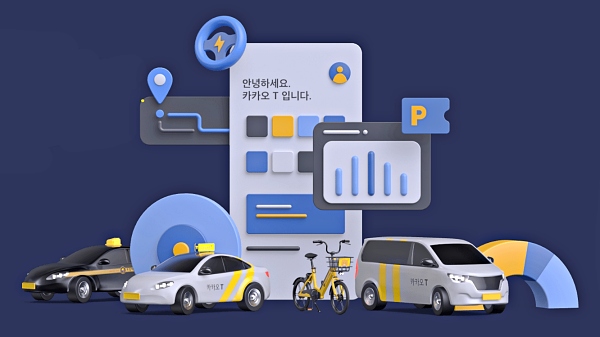
[DigitalToday reporter Jinju Hong (홍진주)] The possibility of business expansion and governance changes around Kakao Mobility is coming into focus at the same time. As a rumor spreads that Uber may take management control, Kakao Mobility continued its profitability improvement trend as operating profit rose for a third straight year.
Uber Taxi launched a premium mobility service called Premier Van. With demand rising among family travelers and for golf and airport trips, it is targeting the large-vehicle ride-hailing market. The service plans to start in Seoul and expand to other regions in stages.
• Is Uber taking management control of Kakao Mobility? • Kakao Mobility’s operating profit rises for a third straight year as profitability improvement accelerates • Uber Taxi introduces a premium van service seating 5 passengers
Tesla is stepping up its offensive across products, software and services. Tesla Korea announced it will bring the long-wheelbase, three-row, six-seat electric SUV Model Y L to the local market. This is a strategic reshuffle of its lineup that coincides with the halt of Model S and Model X sales and positions the Model Y L as its new main model.
It is also speeding up ecosystem expansion by foreshadowing a nationwide rollout of its robotaxi. In Japan, it is also adding a promotion offering free Supercharger benefits, moving to secure demand with region-specific strategies.
• Tesla launches six-seat Model Y L in South Korea, starting at 64.99 million won • Tesla FSD v14.3 expected to be released this week, “internal beta under way” • Tesla robotaxi set for nationwide U.S. expansion, targeting 70 percent of the U.S. population • Tesla offers “3 years of free Supercharging” to new-car buyers in Japan, delivery deadline seen as key
Tesla has halted new production of the Model S and Model X and is focusing on selling existing inventory. With the decision to discontinue the models, unsold inventory has exceeded 50,000 vehicles, drawing attention to future supply-demand conditions and price fluctuations.
• Tesla halts new production of Model S and X, selling only inventory cars • Tesla inventory surges as Model S and X are discontinued, with unsold stock topping 50,000
Tesla expects an 8 percent rebound in the first quarter, but its long-term growth outlook remains unclear. Headcount at its Austin plant fell 22 percent over a year to 16,506, adding to concerns about organizational stability.
The reality of the robotaxi service is also challenging. Even after expanding the mapped area 12-fold, it has only 8 vehicles, and some vehicles are driven by humans rather than robots, highlighting a clear gap between plans and actual results.
• Tesla forecasts an “8 percent rebound” in the first quarter, but its long-term growth outlook remains uncertain • Tesla Austin plant headcount falls 22 percent over a year to 16,506 • “Mapped area expanded 12-fold, but only 8 vehicles” shows the painful reality of Tesla’s robotaxi • Thought it was a robot but it was a person? Tesla reveals the truth about its robotaxi
Global automakers are revamping electric vehicle and vehicle UX strategies at the same time. Ford signaled it would launch a low-priced electric vehicle at the Model 3 and Model Y level, strengthening its push into the mass market. Volkswagen is optimizing its EV lineup by adjusting launch schedules for some models in the U.S. market.
Changes are also being detected in the driving and control experience. Volkswagen’s CEO stressed the importance of physical buttons and voiced opposition to switching to touchscreens, while Mercedes introduced a yoke steering wheel on the EQS model, opening an era of steer-by-wire and beginning a new UX experiment.
• Ford CEO: “We will launch an affordable Model 3- and Model Y-class electric vehicle” • Volkswagen: “ID. Buzz will skip only the 2026 model year in the U.S., moving straight to the 2027 model year” • Volkswagen CEO: “Physical car buttons are non-negotiable. Why use a touchscreen?” • Mercedes opens the era of steer-by-wire, replacing the EQS steering wheel with a yoke
After Apple officially released iOS 26.4, users can run a dedicated ChatGPT app in CarPlay and talk by voice, but reactions have not been as strong as expected as the function shows limitations.
Waymo localized the app and in-vehicle screen for its autonomous ride-hailing service, Waymo Driver, into 7 languages, including Korean. The key to the overhaul is improved ease of use. Without separate language settings or translation apps, the app and service screens automatically switch to match the smartphone’s language settings. A key feature is that it removes the language-change process itself to improve accessibility.
• “It’s hot, turn on the air conditioner” doesn’t work? Limits of ChatGPT for Apple CarPlay • Waymo adds UI support for 7 languages including Korean, switching based on phone language settings
Also, a micromobility startup spun off from Rivian, is working with U.S. food delivery company DoorDash to develop an autonomous delivery vehicle. The two companies agreed to jointly pursue an autonomous model based on Also’s small electric delivery platform.
• Rivian spinoff Also to develop autonomous delivery vehicle with U.S. delivery app DoorDash
Estonian electric motorcycle maker Verge Motorcycles said it shipped a model equipped with an all-solid-state battery from its actual production line, fueling expectations that a technology long called the battery industry’s “holy grail” may be entering commercialization.
• Electric motorcycle Verge TS Pro finally enters mass production with an all-solid-state battery
Bicycle rack maker Allen launched a loop-mounted bicycle rack, Smart Suction Go, that lets users check suction pressure in real time on a smartphone.
The new product keeps the core functions of the existing Smart Suction Bike Rack but simplifies the structure to improve portability and price competitiveness at the same time. The key is that it uses technology to address the anxiety inherent in suction mounting.
• No more worries about it falling off: suction bicycle rack with a pressure sensor is out
 Jinju Hong (홍진주)
hongjj@d-today.co.kr
Jinju Hong (홍진주)
hongjj@d-today.co.kr