
South Korea's financial authorities and the Korea Exchange said they will strengthen investor protection on the 30th anniversary of the derivatives market, while boosting market vitality through product diversification and improved trading conditions.
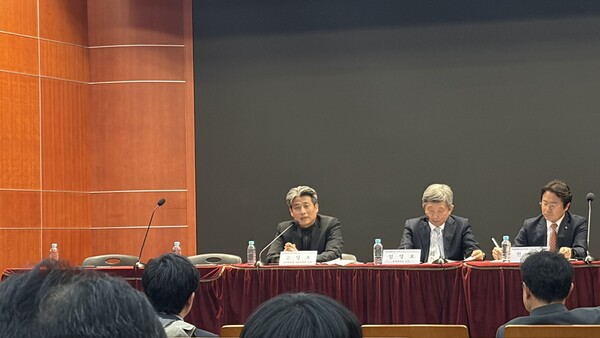
At a joint policy symposium held on April 2 at the Geumtu Center in Yeouido, Seoul, Ko Young-ho (고영호), a director at the Financial Services Commission's Capital Markets Division, said excessive speculative trading has fallen as investor protection strengthened, but it is also possible to raise concerns that market vitality has weakened, making a balanced approach necessary.
He said regulators pursued rule changes in May last year to open a night derivatives market, and in December they refined investor protection measures by aligning requirements for advance education and simulated trading for investments in both domestic and overseas derivatives products.
Ko said a policy to diversify derivatives is also under way. He said introducing weekly options that expire every day is aimed at diversifying covered call strategies and drawing some ETF demand that has formed mainly around overseas underlying assets into the domestic market.
He also mentioned issues linking digital assets and the capital market.
He said digital-asset derivatives issues should be reviewed comprehensively alongside questions including whether digital assets are securities, the legal nature of exchanges, the issue of underlying assets for spot bitcoin ETFs and the implementation of a legal framework for tokenised securities, together with the Capital Markets Act and the second-stage user protection legal system. He added, "We will resolve them one by one."
Kim Ki-dong (김기동), a managing director at the Korea Exchange, said Korea is a rare market in Asia where equities, interest rates, currencies and commodities are evenly developed, but stressed that product development and institutional improvement are needed for the next 30 years.
The exchange said it plans to introduce individual stock weekly options in the equities product group in the first half of this year and roll out zero-day options based on the KOSPI200 index and the KOSDAQ150 index in the second half.
It also plans to sequentially pursue listings of total return index futures and dividend index futures to draw into the exchange demand for total return swaps and dividend index swaps traded over the counter.
In the fixed income, currencies and commodities product group, it said it is preparing to list carbon emission allowance futures and aims to complete the listing by early next year in the second half.
It also said it is reviewing the feasibility of listing options based on Korean Treasury bond futures and is considering reducing trading units to revitalise the gold futures market.
On digital assets, it said it will prepare to list futures products once institutional arrangements are made and a domestic price-based digital asset index is developed, while watching legislative trends.
On the trading environment, it said that after opening its own night market last year, it is ultimately preparing a shift to a 24-hour trading system.
Kim said expanding participation by domestic institutions, especially securities firms, is important to improve a market structure with a high foreign investor share.
On retail investors, he said the market should not return to one centred on individuals as in the past, but regulatory improvements in line with global standards are needed so risk-seeking investors can trade in a domestically regulated market rather than overseas.
 Oh Sang-yup
yub@d-today.co.kr
Oh Sang-yup
yub@d-today.co.kr