
[DigitalToday reporter Yoonseo Lee] Vet, a dUNL validator for the XRP Ledger (XRPL), said, "XRPL can coordinate a quantum-resistant hard fork, but Bitcoin cannot."
On April 1, blockchain outlet The Crypto Basic reported that Vet said, amid debate that quantum computing could threaten existing cryptography, Bitcoin’s difficulty in switching lies not in technology but in social consensus. He said Bitcoin would struggle to draw consensus in a decentralised ecosystem and that conflicts over governance have repeatedly occurred. By contrast, he said XRPL can push upgrades relatively smoothly because validators have a tradition of introducing and adopting protocol improvements.
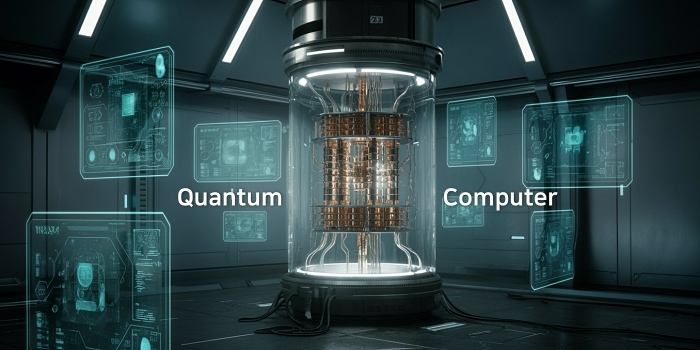
On the quantum threat, Google explained that running Shor’s algorithm, optimised for quantum computers, could theoretically crack a 256-bit Elliptic Curve Digital Signature Algorithm (ECDSA) in minutes. Major cryptocurrencies such as Bitcoin, Ethereum and XRPL use ECDSA for transaction security and ownership verification.
By contrast, Binance founder Changpeng Zhao (CZ) cautioned against excessive fear, saying an upgrade to quantum-resistant, post-quantum algorithms can be made if necessary. He added that a number of considerations follow in the actual implementation process.
XRPL has also moved relatively quickly in responding to a recent amendment. In February, security researcher Pranamyah Keshikamat reported that he found a critical flaw in a proposed batch amendment and notified the XRPL research team, warning an attacker could exploit it to steal users’ XRP. The development team then asked dUNL validators to vote against it before applying the upgrade, distributed a patch that disabled the vulnerability and later released a revised version. XRPL is also conducting initial tests of post-quantum ML-DSA signatures, building a test environment for quantum-resistant algorithms and developing a protocol-level key-rotation function.
The discussion shows that responding to the threat from quantum computing requires more than technological development. Analysis suggests the success of an actual transition depends on how quickly network participants reach agreement and whether they can build a system to safely migrate existing user assets.
In particular, networks with a broad range of participants and loose decision-making structures, such as Bitcoin, are more likely to face greater pain in a quantum-resistant transition. By contrast, chains such as XRPL, which have accumulated validator-led upgrade experience, may be able to respond relatively quickly. Differences in governance structures across major blockchains are expected to emerge as a factor that will determine the pace of security responses.
Will Bitcoin be able to pull off a quantum hard fork, not technically, but socially as a community? I have my doubts. While i have zero doubts XRP will be able to do that, because we have a tradition of improving the protocol to strengthen our core abilities.
 Yoonseo Lee
yslee@d-today.co.kr
Yoonseo Lee
yslee@d-today.co.kr