
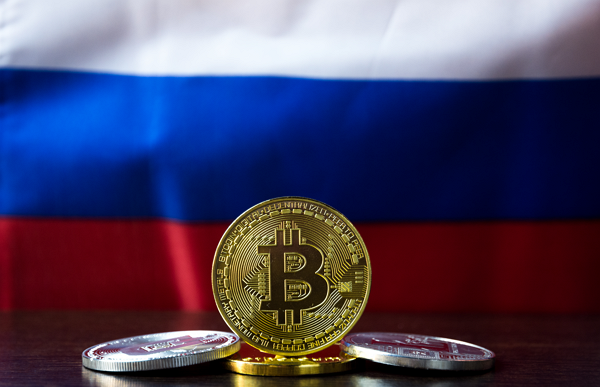
The Russian government has approved a package of bills to cap ordinary citizens' cryptocurrency purchases at 300,000 roubles a year.
Cryptopolitan, a blockchain outlet, reported on March 31 local time that Russia also narrowed the range of assets non-professional investors can buy to high-liquidity cryptocurrencies pre-approved by the Bank of Russia. The Russian cabinet approved legislation containing those measures.
The cabinet approved three draft bills at a Moscow ministerial meeting, including a law on digital currency and digital rights, amendments to some legislation and amendments to the code of administrative offences. The government said it developed the bills as part of an implementation plan to legalise parts of the economy. If the new rules pass by summer, ordinary Russians will be able to buy cryptocurrency worth up to 300,000 roubles a year through a single intermediary. The annual cap is spelled out in law for the first time.
Non-professional (non-qualified) investors can buy only high-liquidity cryptocurrencies designated by the central bank after passing a test that assesses their level of risk awareness. Qualified professional investors will also take a test, but face no purchase cap and can include most digital currencies, excluding privacy (anonymous) coins.
The bills ban cryptocurrency trading that does not go through authorised intermediaries. They introduce a licensing system for platforms such as exchanges and depositories, as well as existing securities exchanges and trustees. Banks and brokers will be allowed to participate in the market, subject to separate prudential requirements.
An amendment to the administrative offences code targets operators of trading platforms and others that fail to meet the new requirements. Anatoly Aksakov (아나톨리 악사코프), chairman of the State Duma committee on financial markets, told Gazeta.ru that trading in crypto products through foreign exchanges that do not cooperate with Russia's licensed intermediaries is expected to be banned.
It partly allowed overseas trading. Russian residents can pay through overseas accounts to buy digital currencies abroad, and can also use foreign currency purchased through domestic intermediaries and transfer it overseas for payment. Such overseas trading must be notified to the Federal Tax Service (FNS).
Aksakov argued that trading under the new system is safer than P2P (peer-to-peer) trading, and said the 300,000-rouble annual cap is a level that allows people to test the market without risking bankruptcy. Prime Minister Mikhail Mishustin (미하일 미슈스틴) also told state-run Rossiyskaya Gazeta that once cryptocurrency buying and selling begins domestically, using coins will become easier and safer.
The bills clearly show Russia is seeking to bring cryptocurrency within a controllable framework rather than impose a blanket ban. As the plans set access hurdles and caps for retail investors while reshaping the market around professional investors and authorised intermediaries, Russia's cryptocurrency market is likely to develop with more weight on regulated legalisation than on expanding freedom.
 Yoonseo Lee
yslee@d-today.co.kr
Yoonseo Lee
yslee@d-today.co.kr