
[DigitalToday reporter Shin-hye Ahn (안신혜)] The battle lines in the quick commerce market are expanding. As delivery times have narrowed to around 1 hour, corporate supermarkets (SSM) with stores that serve as urban logistics hubs are rapidly moving into the market.
On March 31, industry sources said the competitive landscape in quick commerce is being reshaped as e-commerce and corporate supermarkets join after delivery apps.
Corporate supermarkets in particular are emerging as a core part of South Korea's quick commerce market. With dense nationwide store networks, they can use existing outlets as instant-delivery bases without building new large logistics centers.
South Korea's quick commerce market is expected to grow from about 1.2 trillion won last year to about 5.9 trillion won by 2030. As demand rises for receiving needed goods in a short time, delivery times are shortening from next-day or dawn delivery to around 1 hour.
As a result, the ability to secure bases in urban areas is becoming more important. Since it is difficult to build large urban logistics centers, companies are using existing stores, including corporate supermarkets, as logistics centers. This has led to analysis that offline retail channels are well positioned to enter the quick commerce market.
In its early stage, quick commerce grew largely under the lead of delivery apps. Baedal Minjok has expanded its direct-purchase quick commerce service Baemin B Mart by operating a central logistics base and P-packing centers since 2018. Starting with processed foods, it has broadened its product lineup to fresh food such as meat, fruit and vegetables, as well as daily necessities, expanding the scope of B Mart's quick service.
More recently, traditional retail channels such as hypermarkets and SSM, as well as e-commerce companies, are highlighting quick commerce capabilities as a competitive edge.
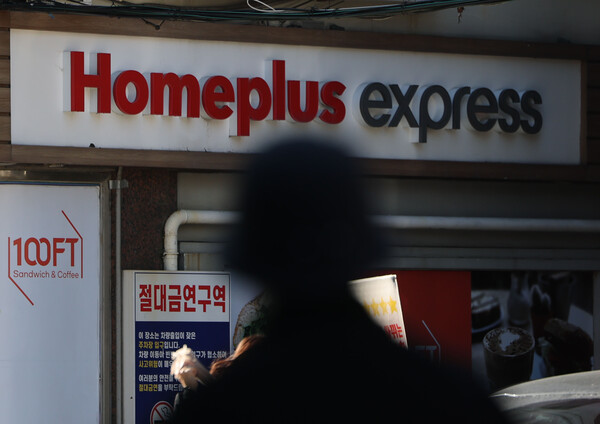
Homeplus has recently emphasized the growth of quick commerce at its corporate supermarket chain Homeplus Express, referred to as Express. As it proceeds with efforts to sell Express, it is seen as having judged quick commerce growth to be emerging as market competitiveness.
Homeplus said Express' quick commerce service, Magic Now, launched in 2021, recorded sales growth in the 60 percent range over 4 years. Of 293 stores, 223 have quick commerce logistics functions and urban logistics center functions. It said having more than 90 percent of stores located in the capital region and major metropolitan cities, which are densely populated areas, became the foundation for growth.
SSG.com operates its quick commerce service Baro Quick at 83 logistics bases as of last month, including Seoul (17), Gyeonggi (27) and the Gyeongsang region (18). SSG.com is securing a nationwide base network by working with E-Mart, an existing large offline retail channel.
Like Homeplus Express, it is characterized by active use of E-Mart stores set up in densely populated areas nationwide. It is seen as having pursued rapid growth by supplying fresh products such as seasonal fruit, vegetables and meat, which are key items for quick commerce orders, from E-Mart and delivering within about 1 hour within a 3 km radius. SSG.com said Baro Quick sales in January rose 30 percent from the previous month.
E-commerce company Kurly is also accelerating efforts to strengthen its quick commerce service, Kurly Now. On March 23, Kurly opened the Kurly Now Seocho branch, securing a base for delivery within 1 hour to Seocho-dong, Bangbae-dong, Banpo-dong and Jamwon-dong. It is expanding quick commerce in central urban areas following its existing DMC and Dogok branches.
Kurly said the number of Kurly Now orders as of December last year rose about 2.5 times from a year earlier. It has moved to secure additional urban quick commerce bases. Kurly predicted strong demand in Seocho-gu, a densely populated area with both offices and large residential complexes, for lunch boxes or snacks, fresh food and meal kits, and daily necessities.
Still, the industry views quick commerce competitiveness as not depending solely on expanding the number of bases. It said that once it is possible to secure bases in urban areas, building delivery infrastructure capable of fast delivery becomes important.
An industry official said, "Even after securing logistics bases based on urban stores, systems such as product packaging and dispatching deliveries must be in place," adding, "Because logistics system conversion and the share of labor costs rise, the quick commerce market has high barriers to entry."
 Shin-hye Ahn
doubletap@d-today.co.kr
Shin-hye Ahn
doubletap@d-today.co.kr