
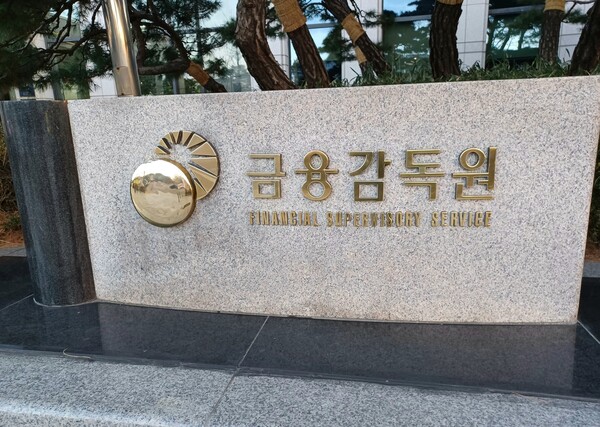
South Korea's Financial Supervisory Service said even if executives or key shareholders of a listed company buy back the firm's shares as part of responsible management, they must return any short-swing trading profits stipulated by law. It said a return obligation arises if profits are made from buying and selling within 6 months, regardless of whether undisclosed information was actually used.
The watchdog on Monday issued guidance titled "Points to note on equity transaction disclosures and short-swing trading profits".
Under the current system for returning short-swing trading profits, executives or key shareholders of a listed company must return gains to the company if they buy the firm's shares and sell them within 6 months, or sell them and then buy them back within 6 months. The rule reflects the view that insiders are more likely to use undisclosed internal information. It does not assess whether information was actually used.
For example, if the head of a listed company sells 100 common shares at 12,000 won per share and then, as the stock price remains low, buys back the same amount within 6 months at 10,000 won per share as part of responsible management, a total short-swing trading profit of 200,000 won is deemed to have occurred and must be returned.
Returns are required even if the securities involved in the purchase and sale are different types. A return obligation arises if a short-swing trading profit occurs even when the traded securities differ, such as buying bonds with warrants (BW) and selling common shares within 6 months. It also applies even if the person was an executive only at one point in either the sale or the purchase, and profits may need to be returned even after leaving the company.
The FSS also provided guidance on equity transaction disclosure obligations. Equity disclosures are broadly divided into large shareholding reports, known as "5 percent reports", and ownership status reports. The FSS urged caution to avoid disclosure violations, noting that the cap on penalties for large shareholding reporting violations was raised tenfold from July last year, from 1/100,000 of market capitalisation to 1/10,000.
Large shareholding reports require a filing within 5 days when a person holds 5 percent or more of a listed company's shares and other securities, or when the holding ratio later changes by 1 percent or more. Ownership status reports require a filing within 5 days when a person becomes an executive or major shareholder of a listed company, disclosing the status of equity holdings.
For newly listed companies, controlling shareholders and executives must newly file both a large shareholding report and an ownership status report within 5 days of the listing date for shares and other securities they already held.
Large shareholding reports must include not only the person's own holdings but also shares held by related parties. Ownership status reports cover not only registered directors but also unregistered executives. Unlike large shareholding reports, which apply to holders of 5 percent or more, the ownership status reporting obligation arises even for holding a single share.
 Online Team
d-today@d-today.co.kr
Online Team
d-today@d-today.co.kr