
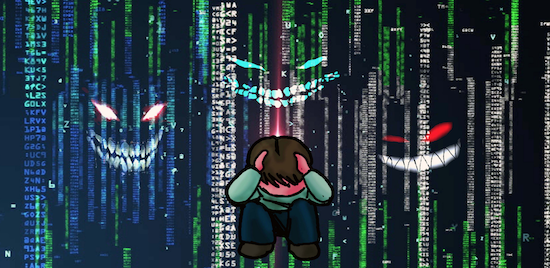
A total of 42.3 percent of South Korean teenagers and 15.8 percent of adults have experienced cyber violence, a survey showed. Some 89.4 percent of teens and 87.6 percent of adults said they agreed on the seriousness of cyber violence that abuses generative artificial intelligence (AI).
The Broadcasting and Media Communications Commission and the National Information Society Agency announced the results of the 2025 Cyber Violence Survey on Monday. The survey was conducted from September to early November last year, covering 16,817 people: 9,296 students from fourth grade in elementary school through third grade in high school, and 7,521 adults aged 19 to 69.
The rate of teens experiencing cyber violence fell 0.5 percentage points from a year earlier, while the rate for adults rose 2.3 points. By gender, males were higher for both teens and adults. By age group, the proportion was relatively higher among middle school students and among adults in their 20s.
For both teens and adults, the top channel for cyber violence was text and instant messages, for both perpetration and victimisation. Among teens, online games also showed high shares of cyber violence. Among adults, social networking services (SNS) also recorded high shares.
By type, cyber verbal abuse accounted for the highest shares of both perpetration and victimisation among teens and adults. In particular, adults' experience of perpetrating and suffering cyber verbal abuse rose from a year earlier.
For both teens and adults, victims most often said they were harmed by someone they did not know at all. Harm caused by someone they met online also increased from a year earlier, to 8.6 percent for teens and 12.1 percent for adults.
For both teens and adults, the top motive for perpetration was retaliation for the other person's behaviour. After perpetrating, 57.6 percent of adults cited feeling justified, up 18.9 percentage points from a year earlier, while 60.8 percent of teens most often said they felt sorry and regretful.
The rate of experiencing digital hate speech rose from a year earlier for both teens and adults, to 19.3 percent and 21.0 percent, respectively. Among teens, hate speech related to body and appearance was most common. Among adults, hate speech related to political orientation was most common.
The share saying cyber violence abusing AI is serious reached 89.4 percent for teens and 87.6 percent for adults. Teens cited the universality of harm due to ease of production as the main reason, while adults cited the possibility of repeated and sustained harm.
The commission plans to work with private companies and public institutions to expand digital ethics education for adults based on the findings. It also plans to strengthen deepfake and generative AI ethics education for youths and expand experiential discussion-based education.
Commission Chairman Jong-chul Kim (김종철) said, "Cyber violence goes beyond a simple ethical issue online and is a matter that undermines human dignity and infringes on the constitutionally guaranteed right of the people to pursue happiness." He added, "We will work to spread a healthy culture of digital use and to prevent harm from the latest cyber violence that abuses AI."
 Seulgi Son
sageson@d-today.co.kr
Seulgi Son
sageson@d-today.co.kr