
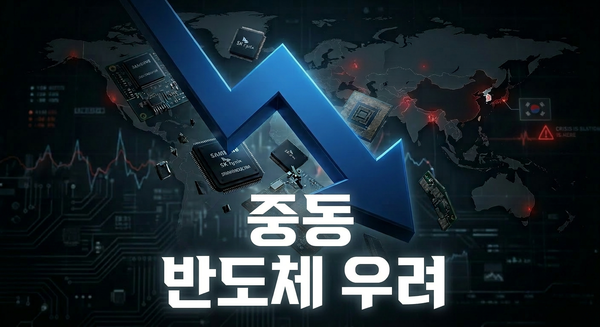
The KOSPI slid into the 5,400 range as Middle East geopolitical uncertainty combined with concerns about semiconductor demand. The stock market this week is expected to look for direction as the course of U.S.-Iran negotiations and the release of key economic indicators in April serve as a turning point.
Last week, the KOSPI closed at 5,438.87 as of the 27th, down 0.40 percent from the previous session. By investor type, foreigners and institutions net sold 13.3164 trillion won and 47.5 billion won, respectively, while retail investors net bought 1.1709 trillion won.
In particular, on a weekly cumulative basis, foreigners' net selling in KOSPI cash equities and net selling of at least 1 trillion won for 7 consecutive sessions occurred for the first time in the history of the domestic stock market. So far this year, there have been 23 sessions in which foreigners net sold at least 1 trillion won. The biggest variable for the market next week is the result of U.S.-Iran negotiations.
President Trump set early April as a de facto deadline for negotiations. April 11 marks the end point of Epic Fury, the military operation end date, and April 28 is when the 60-day deadline under the War Powers Act expires.
In semiconductors, the key is whether the sector can move past the impact of TurboQuant, a memory consumption-reduction algorithm announced by Google. Semiconductor exports for the 1st to 20th this year rose 164 percent from a year earlier to $18.7 billion, and are estimated at $28.0 billion on a monthly annualised basis, likely topping $20.0 billion for a fourth straight month.
Bond market volatility is also a burden on equities. Experts say that, given the hawkish inclination of Shin Hyun-song (신현송), the nominee for Bank of Korea governor who is slated to take office in May, the possibility of a base rate hike could be discussed at the May monetary policy meeting.
The current 3-year government bond yield has jumped rapidly to around 3.60 percent, already reflecting the possibility of at least 1 rate hike within 3 months.
Jung Hae-chang (정해창), a researcher at Daishin Securities, said concerns stemming from Google's Turbo Quant technology are likely to be a short-term psychological negative factor. He added that the decline in semiconductor share prices appears to have been driven by a combination of factors including Middle East instability, Trump risk and profit-taking following a short-term surge.
Ha Geon-hyung (하건형), a researcher at Shinhan Investment Corp, said the link between corporate earnings and the macroeconomic environment in the stock market has weakened significantly compared with the past. He said structural demand for building artificial intelligence infrastructure and supply chain reshoring remains valid regardless of geopolitical shocks.
He added that it is still too early to judge that the time has come to fully reflect fundamental concerns in portfolios.
 Sangyeop Oh
yub@d-today.co.kr
Sangyeop Oh
yub@d-today.co.kr