
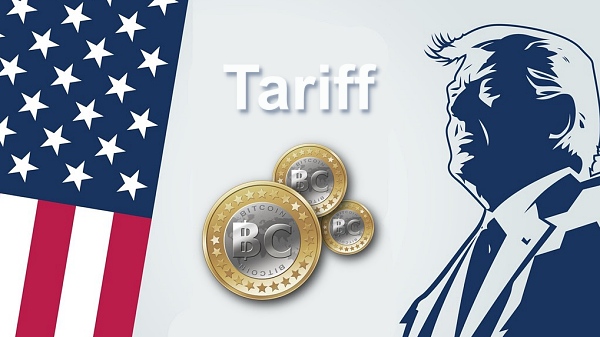
U.S. President Donald Trump announced he will raise the global tariff rate to 15 percent from 10 percent. The measure adds to existing tariffs and takes effect immediately.
On Feb. 21 local time, Trump said he is pressing ahead with tariffs by using the Trade Expansion Act of 1962 and the Trade Act of 1974 after the Supreme Court blocked his plan to impose tariffs under the International Emergency Economic Powers Act, media outlets including Cointelegraph reported.
But lawyer Adam Cochran, a crypto supporter, said, "This bill allows tariffs only for 150 days and only on deficit countries, and the rate is also limited," pointing to legal constraints. Past tariff announcements by Trump delivered a major shock to crypto and stock markets, but this measure was an exception. Bitcoin held around $68,000 and ethereum stayed near $4,200, showing a stable trend.
The Total3 indicator tracking the total crypto market capitalisation fell less than 1 percent to $713 billion. The market is showing a relatively stable trend despite the tariff increase. Major investors such as BlackRock, Fidelity and Grayscale pulled large sums from crypto funds, but the market still recorded net inflows of $54.3 billion, showing strong resilience.
Trump's tariff increase delivered a strong shock to traditional financial markets, but the crypto market instead kept a stable trend. This suggests crypto is increasingly establishing itself as an independent financial ecosystem.
Meanwhile, investor sentiment across the broader crypto market remains subdued. Some investors, however, are diversifying into assets other than bitcoin and ethereum even amid the market slump.
Johann Kerbrat (요한 케르브라트), head of crypto at Robinhood, said, "Customers see the market slump as a buying opportunity and are expanding their interest to assets beyond bitcoin and ethereum." This means investors are increasingly accepting crypto volatility and market changes.
Kerbrat said investors are expanding beyond simple holding into staking and using DeFi, or decentralised finance. Since Robinhood introduced a staking function last December, users have actively participated, showing the crypto market is moving beyond simple trading into a stage of practical use.
 Hyunwoo Chu
cookinpapa@d-today.co.kr
Hyunwoo Chu
cookinpapa@d-today.co.kr