
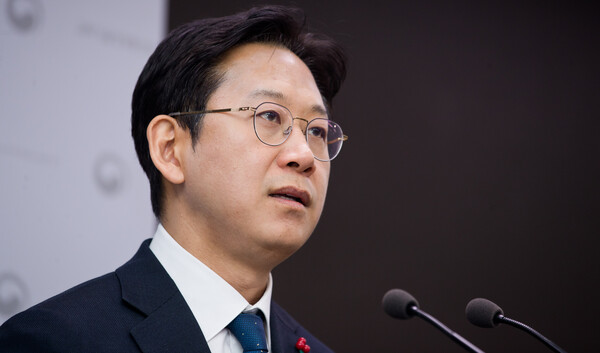
South Korea's Ministry of Science and ICT on Monday unveiled a "physical AI integrated platform" at the Korea Advanced Institute of Science and Technology (KAIST) aimed at reducing reliance on foreign products and presented a strategy to secure key competitiveness in physical AI.
The KAIST physical AI demonstration lab unveiled on the day is an integrated testbed that implements end-to-end factory operation solutions using only domestic technologies, including sensors, control, robots and manufacturing software. It combines technologies from domestic small and medium-sized enterprises including sensors (CanTops), controllers (Mobensis), humanoid robots (Arobot) and AI data infrastructure (Makinarocks) to achieve 100 percent localisation from the factory "brain" (AI operating system) to its "muscles" (robots and equipment). Domestic manufacturing sites have relied on foreign equipment and operating software solutions costing hundreds of millions of won.
At the core is an "AI factory manager" (operating agent). It uses digital twin-based simulations to optimise actual factory logistics and schedules in real time. The structure allows small and medium-sized companies to run advanced factory operations without foreign solutions. A demonstration lab has also been built at Chonbuk National University, and the two labs will be operated as open test environments. They are also set to be used as hubs for an export model called the "K-manufacturing intelligent factory package."
The physical AI strategy announced on the day also focuses on building an end-to-end system spanning technology acquisition, demonstration, industrial diffusion and global expansion. The four tasks are developing three common foundational technologies including robot foundation models, world models and computing platforms; automating manufacturing processes in three key industries including autos, precision manufacturing and shipbuilding; building an ecosystem; and establishing a cooperation system among industry, academia, research institutes and ministries.
Physical AI is one of the key missions of the "K-Moonshot" AI project to solve nationwide grand challenges that the government launched in February.
The ministry plans to reflect opinions from this meeting in the strategy and finalise and announce the final plan at the next meeting of ministers related to science and technology.
Bae Kyung-hoon (배경훈), deputy prime minister and minister of science and ICT, said the next three years are a "golden time" when the nation must mobilise all its capabilities to become a powerhouse in physical AI. He said it must move beyond the technology development stage to a stage of changing industry and exporting it.
 Seulgi Son
sageson@d-today.co.kr
Seulgi Son
sageson@d-today.co.kr