
The Alibaba Qwen team lost its head of technology and two senior researchers within 24 hours of releasing its latest model. When the news emerged, the industry reacted immediately. As it coincided with moves by Google and OpenAI to return to closed models, a view began spreading that open-weights AI does not make money.
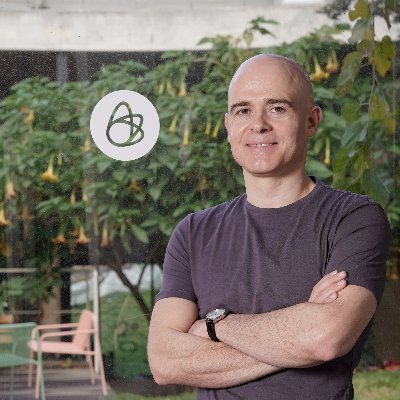
Against this backdrop, Zeev Farbman (지브 파브먼), co-founder and CEO of AI model developer Lightricks, made clear he intends to accelerate an open-weights strategy.
He has recently reiterated on social media platform X, formerly Twitter, the strategic value of local AI based on open-weights models.
According to him, Google and OpenAI are focusing on closed models not because open source does not make money, but to build a software monopoly structure that charges a toll on every pixel and workflow.
For professional studios, the limits of closed APIs are clear. He said, "Weta Digital, which handled the visual effects for the film Avatar, built its own rendering pipeline from scratch instead of buying off-the-shelf software. To connect physical lighting calculations directly to existing tools, you need to be able to open up the model. A black-box API makes that impossible. Uploading pre-release concept art to an external server is itself a security issue, so for professional production companies on-premises deployment is not a choice but a necessity."
He added, "If you build a product on top of another company's closed API, you are borrowing your core capabilities. If the supplier raises prices, margins collapse, and if the model is updated, the entire product is shaken. It is the same structure as when closed operating systems in the 1990s tried to control the entire stack and left space for Red Hat to grow into a multi-billion-dollar company based on Linux."
He said Lightricks is also following the Red Hat course. He said, "We open up the foundational technology to make it an industry standard and generate revenue from enterprise deployments and third-party platform licensing. The more developers build their own tools with Lightricks technology, the stronger the company's business base becomes."
Under this strategy, Lightricks recently released the LTX-2.3 model in an open-weights format that also makes the model weights public.
According to him, LTX-2.3 is a multimodal model with 20.9 billion parameters that processes text, images, audio and video. Thanks to an architecture that handles highly compressed data, it can run 100 percent locally on consumer hardware and can also generate 4K-resolution video.
He stressed, "If you run it locally, there is no need to rely on the cloud and costs do not rise as usage increases. The assets you create never leave the local drive."
In creative software, a heavy and complex interface has long served as a barrier to entry. But the emergence of AI coding tools has enabled even small teams to rebuild such interfaces in a matter of weeks.
Farbman said, "The interface is no longer a differentiator. Defensible assets have shifted to the base model itself. Training a high-quality multimodal model requires tens of millions of dollars and years of research. Lightricks uploaded the weights to Hugging Face so anyone can build their own pipeline. Lightricks built the engine, but the pipeline belongs to users."
 Chi-gyu Hwang
delight@d-today.co.kr
Chi-gyu Hwang
delight@d-today.co.kr