
Banks will expand supply of the Saehuimang Holssi policy loan product for low-income and vulnerable groups. The supply target for this year was set at about 5.1 trillion won.
The Financial Supervisory Service said on Sunday that banks supplied a total of 4.0167 trillion won through Saehuimang Holssi last year, up 500.3 billion won from 3.5164 trillion won a year earlier. The number of recipients was tallied at 214,000 people.
Saehuimang Holssi targets borrowers with annual income of 40 million won or less, or those with annual income of 50 million won or less who fall in the bottom 20 percent by credit score. Interest rates are capped at 10.5 percent a year, and loan limits are set autonomously by each bank up to a maximum of 35 million won.
Cumulative supply since the product’s launch through the end of last year totalled about 42.2 trillion won, and the number of beneficiaries reached 2.93 million people.
The average loan amount last year rose from a year earlier to 13.9 million won per loan. This was analysed as reflecting higher loan limits and eased income requirements.
The average interest rate fell 0.9 percentage point from 7.6 percent a year earlier to 6.7 percent, while the delinquency rate held at a similar level to the previous year at 1.6 percent.
Internet and mobile banking accounted for the largest share of sales channels at 38.7 percent, while the share of non-face-to-face channels such as loan brokerage platforms expanded to 31.7 percent. The share of sales through branches fell to 29.6 percent.
Specialised products reflecting demand from young people, sole proprietors and refinancing are also expanding. Examples include refinancing-type loans that convert loans from non-bank financial institutions into bank loans, small-amount products with an emergency-fund nature, and living-stability funding support products for young people.
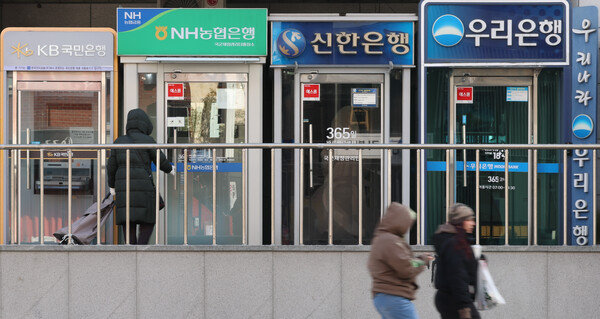
By bank, the five major banks - Woori Bank, Hana Bank, Shinhan Bank, NongHyup Bank and KB Kookmin Bank - accounted for 75.2 percent of total supply.
Banks set this year’s supply target at about 5.1 trillion won, up 900.0 billion won from the previous year. This reflects an inclusive finance stance aimed at expanding funding supply to mid- and low-credit borrowers.
The watchdog plans to work with banks to resolve difficulties in the expansion process and to strengthen tailored financial support centred on non-face-to-face channels and specialised products.
 Ji-young Lee
ljy@d-today.co.kr
Ji-young Lee
ljy@d-today.co.kr