
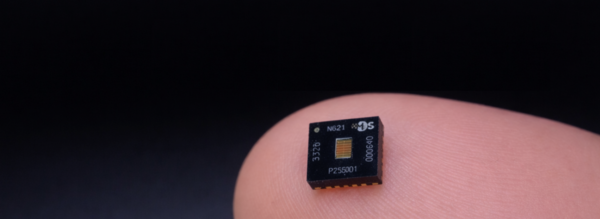
Physical AI is changing diagnosis and treatment by combining with medical equipment. It can complete molecular diagnosis in 15 minutes outside hospitals, model an individual patient’s brain structure with AI to design customised stimulation treatment, and use a thumbnail-sized sensor chip to analyse a substance’s chemical composition in real time.
As physical AI moves beyond software and combines directly with medical and sensing equipment, a new market is opening to raise point-of-care accessibility. European deep-tech startups have recently drawn attention by taking the lead in applying physical AI to medical and sensing fields. They focus on a virtuous cycle in which physical AI models improve the precision of physical devices, and the data collected by the devices is then used to further advance AI.
Neuroelectrics, based in Barcelona, Spain, is a representative case combining an AI-based digital brain model with non-invasive brain stimulation equipment. Its NeuroTwin platform uses a patient’s MRI data to segment brain tissue such as scalp, bone, white matter and grey matter. It then generates a finite element model using machine-learning algorithms.
Business development director Rafal Nowak (라팔 노왁) said, "We create a model based on each patient’s MRI, first simulate the stimulation effect in that model, and then apply it to actual treatment." He added, "Because every brain is different, a personalised approach is key."
It is currently at the stage of wrapping up a clinical trial for epilepsy treatment and plans to apply for approval from the U.S. Food and Drug Administration next month. Its electroencephalogram measurement equipment has already received FDA approval. Nowak said, "The next stage is for home use." He added, "The goal is to reduce the burden on patients of visiting hospitals."
Genomtec, based in Wroclaw, Poland, has combined AI with a portable molecular diagnostics platform. Its in-house SNAAT (isothermal nucleic acid amplification technology) works at a constant temperature of 60 to 70 degrees Celsius, unlike PCR, eliminating the need for heating and cooling. CEO Miron Tokarski (미론 토카르스키) said, "Amplification itself is possible within 5 minutes for a positive sample, and results come out in about 15 minutes including the extraction process."
The company said it has higher specificity than PCR because 6 primers can bind to up to 8 gene fragments. AI is used to shorten the development period for diagnostic reagents when new pathogens emerge from the existing 6 months to 1 year to several weeks. The lab-on-a-chip card is disposable, and a single card can detect up to 5 pathogens simultaneously.
The lab-on-a-chip card is made of pure plastic and has no electronic components, valves or optical devices, keeping manufacturing costs low. While competitors’ analysis equipment costs 20,000 to 30,000 euros per unit, Genomtec’s equipment is much cheaper than that, making possible a "reagent lease" model that provides equipment for free and secures revenue through card sales. The per-card price is about 20 to 30 euros.
Tokarski said, "Large hospitals can run up to 60 tests a day, and it can also be operated in true point-of-care settings such as general practitioner clinics, pharmacies and airports." AI’s role there is to automatically screen thousands of similar pathogen databases and reagent design principles when new pathogens emerge. He said this can derive an optimal pool of diagnostic reagent candidates within weeks.
◆From 15-minute point-of-care molecular diagnostics to fingertip sensors for robots
MantiSpectra, based in Eindhoven in the Netherlands, has developed the miniaturised near-infrared hyperspectral sensor chip ChipSense. The chip itself measures 1 by 1.5 mm, and is only 4 by 4 mm including the package. It is manufactured with a group III-V semiconductor process based on indium gallium arsenide and indium phosphide, and measures a total of 64 channels, 16 channels times 4 bands, extending beyond visible light into the non-visible range.
Business development manager Leonardo Boarotto (레오나르도 보아로토) said, "Current wearable devices have only 1 channel of green light, but we provide 64 channels, delivering 64 times more data." He added, "This technology is protected by patents." He said physical AI applications are emerging as a key growth driver, particularly by mounting the chip on humanoid robot fingers to identify materials such as textiles and food in real time.
All three companies are actively seeking to enter the South Korean market. Neuroelectrics is aiming to secure distribution partners and investors, and MantiSpectra said it has already built relationships with major South Korean companies. Genomtec is also pursuing partnerships with local distributors. As physical AI spreads into medical and sensing fields, the potential for collaboration and acquisitions involving South Korean bio and medical device companies and European deep-tech startups is also drawing attention.
 Daegeon Seok
d2dg@d-today.co.kr
Daegeon Seok
d2dg@d-today.co.kr