
[DigitalToday reporter Chi-gyu Hwang] Amazon, Alphabet, Meta and Microsoft will pour $700 billion into AI infrastructure this year. Apple has only said it will invest $14 billion.
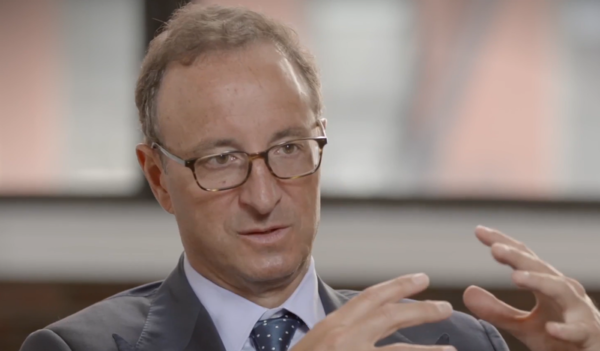
Is Apple lagging behind in the AI revolution? Daniel J. Arbess (다니엘 J 아베스), founder and CEO of private investment firm Xerion Investments, sees it differently. He argues Apple is not spending less out of ignorance, but out of conviction.
In a recent Wall Street Journal op-ed, he pointed to the M5 chip as the basis for that view.
Apple unveiled the M5 chip in October last year, embedding neural network accelerators in all GPU cores. Based on its own performance tests, the M5 can run a 30 billion-parameter model in 3 seconds.
According to Arbess, a single MacBook Pro can draft legal documents, debug code and summarise materials without the internet, subscriptions or API keys.
Apple is currently operating 2.5 billion devices. That means Apple devices are in the hands or on the desks of 1 in 4 people in the world’s internet population. Google receives about $1 billion a year from Apple and uses Gemini for areas that on-device processing cannot handle. Arbess called this a strategy of "leasing only the top floor, unlike rivals who mortgage the whole building," adding, "If Anthropic or DeepSeek releases a better model next year, you can just switch tenants."
Arbess said Apple’s foothold in the consumer device market will become a solid springboard for Apple to amplify its voice in AI, at least in AI for individual users, against AI companies centred on cloud-based services.
"By 2032, Apple Intelligence is expected to be installed on virtually all products. Email summaries, writing assistance, photo editing, translation, search. If all of this is processed on the device, requests that reach servers disappear," he said. "Hundreds of millions of users who paid $20 a month for ChatGPT or Copilot will be able to use the same functions on devices they already own."
The enterprise AI market is different, he said. "Multi-agent systems that process millions of documents need data centre-grade hardware. Nvidia’s Vera Rubin platform memory bandwidth is 36 times wider than Apple’s highest-spec chip," Arbess said. "Microsoft, Amazon and Google can expect to recoup investment in enterprise AI. But the pace is likely to be slower than current spending suggests."
Arbess said Meta is the company in the most vulnerable position because of Apple’s moves. "Meta has no platform, no operating system, no cloud, no devices. It says it will spend up to $135 billion on AI this year, but Apple provides the function for free at the operating system level," he said. "If Siri resolves queries on the device, there is less reason to open the Instagram app. If AI summarises 20 minutes of scrolling into 30 seconds, the ad inventory Meta has to sell shrinks by that much." He added, "Meta’s targeting technology is still the best in the world, but Apple is encroaching on the attention that technology can sell."
"Does the shift to AI for individual users require $500 billion worth of centralised infrastructure, or are 2.5 billion devices that have already been built and sold enough? Apple has bet on the device," Arbess said, summarising his view.
 Chi-gyu Hwang
delight@d-today.co.kr
Chi-gyu Hwang
delight@d-today.co.kr