
Netflix has declared its entry into the live music market, led by a livestream of BTS’s comeback concert. As global streaming platforms extend into concert livestreaming, concerns are growing that South Korean broadcasters’ position could be shaken.
Netflix will livestream “BTS Comeback Live ARIRANG” from Gwanghwamun Square in Seoul at 8 p.m. on the 21st to more than 190 countries. It is Netflix’s first live event broadcast from South Korea to the world and its first livestream of a music performance.
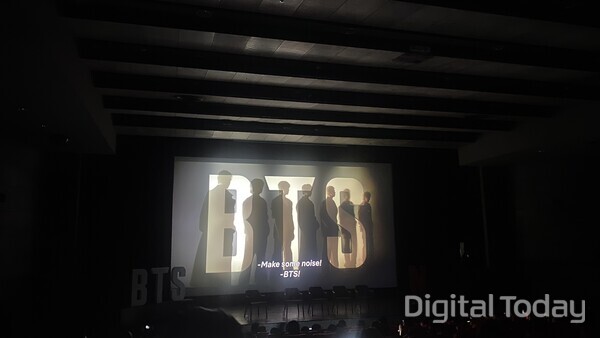
Brandon Riegg (브랜든 리그), Netflix vice president of nonfiction series and sports, said at a pre-media briefing held at Cinecube in Gwanghwamun, Seoul, on the 20th, “We have contributed to spreading Korean culture through K-dramas and K-films. This BTS live is a cultural event where that role expands into K-pop.” He added, “It will provide an experience where a pop culture event of this scale should be watched on Netflix.”
The company said it is bringing capabilities built through sports broadcasts into music performances. Netflix livestreamed more than 200 live events as of last year. Its 2024 National Football League Christmas game drew 27.5 million viewers. In January, it livestreamed climber Alex Honnold scaling Taiwan’s Taipei 101 building with his bare hands. It delivered uninterrupted coverage even in the extreme environment of a 500-metre-high building exterior wall.
Riegg said, “There are too many entertainment options in the world right now, and single events that can connect people around the world at the same time are increasingly disappearing,” explaining the strategy.
The concert is also set to be Netflix’s biggest live event this year by scale. Netflix’s previous biggest live event, a boxing match between Jake Paul and Mike Tyson, was reported to have had a total budget of $60 million, or about 87 billion won. Netflix did not separately disclose production costs for the concert, but it will install 23 cameras across a 1.6-km stretch and deploy a total of 164,500 kg of broadcast equipment. It is a global production with staff from 10 countries. The overall director is Hamish Hamilton, who directed the Super Bowl halftime show and the opening ceremony of the 2012 London Olympics.
Riegg said, “It will be the biggest event among all live events Netflix runs this year,” adding that challenges include holding an event of that scale in the middle of downtown Seoul and meeting expectations from both the on-site audience and viewers around the world. He added, “Based on the live expertise we have built up, I am confident it will proceed without issues as with previous events.”
Netflix also left open the possibility of livestreaming concerts by other K-pop artists, starting with BTS. Riegg said, “Under partnerships with Korean producers, there will be many other opportunities for live events,” adding, “It is hard to say now, but there are things under way.” Netflix will also run watch-party events in major regions including the United States and Brazil, where fans can gather in one place to watch together.
The issue is South Korean broadcasters. Terrestrial and cable networks have maintained live-broadcast capabilities and advertising revenue through year-end music awards and livestreams of major performances. As global streaming platforms enter the K-pop livestream market, a sense of crisis is rising.
Broadcasters’ advertising revenue is in decline. According to the Korea Communications Commission’s “Broadcasting Business Operators’ Property Status for Fiscal Year 2024,” total revenue for all broadcasting operators last year fell 0.9 percent from a year earlier to 18.8042 trillion won. Revenue fell in all areas except IPTV, with terrestrial broadcasters posting the largest decline. Terrestrial advertising revenue in particular fell 9.9 percent from a year earlier to 835.4 billion won, less than half of the 2015 level of 1.9112 trillion won.
The industry points to structural causes including a regulatory gap with overseas streaming platforms. Under Article 73 of the Broadcasting Act and its enforcement decree, terrestrial broadcasters are limited to scheduling ads within 15 percent of total broadcast time. That effectively imposes a structural cap on advertising revenue. Netflix, by contrast, is classified as a value-added telecommunications service provider under the Telecommunications Business Act and is not regulated under the Broadcasting Act. Critics say the absence of constraints on revenue structure and production spending creates differences in capacity to invest for large concert livestreams.
A broadcasting industry official said, “The reason terrestrial broadcasters were able to secure K-pop awards shows or broadcasts of large performances was that there were effectively no other alternatives,” adding, “If a structure takes hold where Netflix directly signs contracts with management agencies, domestic broadcasters’ negotiating power will fall, as it has with dramas and entertainment shows.”
Management agencies also favour Netflix. Yoo Dong-joo (유동주), head of Hybe Music Group Asia Pacific (APAC), said, “In Korea’s most iconic location, the experience of fandom and the public, Koreans and foreigners enjoying a performance together is culturally rare,” adding, “We judged Netflix to be the most appropriate partner to spread that experience globally.”
 Seulgi Son
sageson@d-today.co.kr
Seulgi Son
sageson@d-today.co.kr