
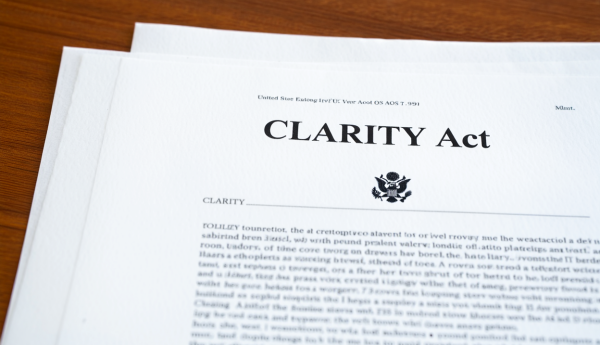
A digital asset market structure bill in the U.S. Senate that had fallen into a deadlock is showing signs of picking up speed again.
CoinDesk, a blockchain media outlet, reported on March 17 that Senate Banking Committee Chairman Tim Scott (팀 스콧) said at the DC Blockchain Summit in Washington that the CLARITY bill is “making informal progress.” He said a new draft that includes stablecoin-related provisions could be released as early as this week. That is seen as a sign that talks, which had made no progress for months, are entering a full-fledged negotiating phase again.
The bill is key legislation designed to set a regulatory framework for the broader cryptocurrency market. Regulation of stablecoin issuance and operations, and revenue structures, has emerged as the biggest issue.
The talks involve key senators including Democrat Angela Alsobrooks (앤젤라 올스브룩스) and Republican Thom Tillis (톰 틸리스). White House officials are also working to coordinate. With both parties seeking to make some concessions, assessments say key sticking points that had held up progress are gradually narrowing.
Over the past month, the core agenda in negotiations has expanded beyond regulatory design to political and institutional issues. In particular, controversy over cryptocurrency projects linked to U.S. President Donald Trump has spread into an ethics issue, creating a variable in the legislative debate. Quorum issues stemming from vacancies on major financial regulatory bodies, and whether to strengthen know-your-customer (KYC) rules, have also emerged as key points.
Regulation of decentralised finance, or DeFi, is also at the centre of the debate. Some lawmakers argue that existing financial regulations should apply to the DeFi sector, while others call for a cautious approach, saying it could stifle innovation. Anti-money laundering, or AML, rules are also seeing similar differences over their strength and scope of application. Scott said, “These issues are important to both parties, and we are moving close to agreement on a significant portion.”
In the market, participants see passage of the bill as a major turning point for the U.S. cryptocurrency industry. Regulatory uncertainty has limited inflows of institutional investors, so a clear legal framework could significantly boost market confidence. In particular, if stablecoin rules are specified, it is expected to affect global payments and competition over digital dollars.
Still, hurdles remain before a final agreement. Differences have not been fully resolved on detailed provisions including whether stablecoins can pay interest, the scope of DeFi regulation and AML standards. Even so, if releasing a draft this week becomes reality, there is a strong possibility that long-stalled U.S. cryptocurrency legislation will face a full-fledged turning point.
 Jinju Hong
hongjj@d-today.co.kr
Jinju Hong
hongjj@d-today.co.kr