
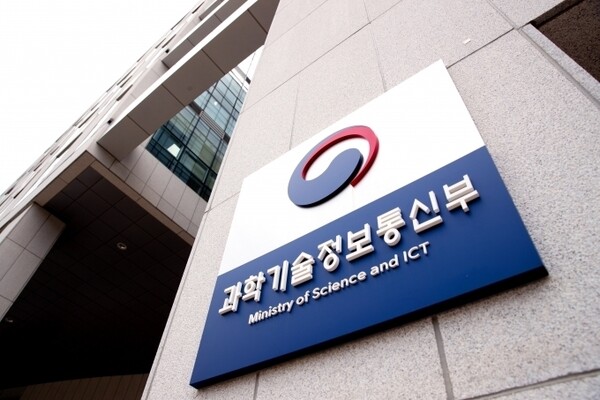
South Korea's Ministry of Science and ICT said on Wednesday it will systematically pursue a strategy, including global cooperation, to secure superconductor technology by 2035, a key technology for commercialising fusion energy.
Superconductor technology is a core technology essential for generating ultra-high magnetic fields in fusion reactors. The field has a high technical barrier and requires long-term research and development.
As competition to develop fusion superconducting technology accelerates among global private companies and leading research institutions, the ministry decided to comprehensively push measures including stronger R&D, an industry-academia-research cooperation system, expanded region-linked research infrastructure and cooperation with leading global research institutions.
It will first build test and verification infrastructure for superconducting conductors at a world-leading level. The ministry will build a 16-tesla superconducting conductor test facility. The facility is being built at the Korea Institute of Energy Technology, and it plans to complete construction of the experimental building by June and equip it with full-scale experimental equipment.
Considering that Switzerland's SULTAN facility can test superconducting conductor performance up to 12 tesla, building 16-tesla test infrastructure is expected to be an important turning point for securing technological competitiveness. The ministry will invest 12 billion won this year to build the test facility, with completion targeted for 2028.
It will strengthen strategic cooperation with leading global research institutions. The Korea Fusion Energy Research Institute will begin joint research with the European Organization for Nuclear Research, known as CERN, starting with the signing of an MOU for joint research on superconducting wire rod manufacturing. The ministry is jointly developing fusion blanket technology with the European Union.
It will also push ahead in earnest with development of high-temperature superconductor technology that enables fusion reactor miniaturisation. High-temperature superconductors can realise stronger magnetic fields than existing technology. The ministry will pursue mid- to long-term R&D to secure key materials, processes and performance verification technologies needed for magnet manufacturing. It plans to invest 2.15 billion won this year in developing high-temperature superconducting magnet manufacturing technology for fusion reactors.
It will also establish a one-team cooperation system involving industry, academia and research institutes. Research institutes, universities and companies will share roles to jointly pursue technology development and demonstration, and industrial linkages. The ministry plans to complete the implementation system in the first half of this year to accelerate the pace of technology development.
Oh Dae-hyun (오대현), director general for future strategic technology policy at the ministry, said, "Superconductor technology is one of the key difficult challenges that will determine the success or failure of fusion commercialisation." He added, "We will actively 추진 so that our country can take the lead in securing superconductor technology by organically linking R&D, industry-academia-research cooperation, expanded research infrastructure and international cooperation."
 Jin-ho Lee
jhlee26@d-today.co.kr
Jin-ho Lee
jhlee26@d-today.co.kr