
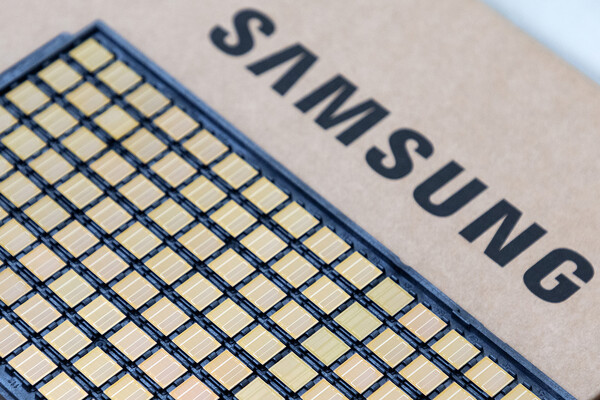
Samsung Electronics unveiled its next-generation HBM4E physical chip for the first time at Nvidia GTC 2026. Samsung Electronics said it will attend Nvidia GTC, held in San Jose, California, from March 16 to 19 local time, where it will showcase for the first time an HBM4E chip and core-die wafer developed using its 1c DRAM process and its foundry 4-nanometre base die.
HBM4E supports speeds of 16 Gbps per pin and bandwidth of 4.0 TB/s. The company stressed it developed HBM4E by bringing together its in-house capabilities in memory, logic design, foundry and packaging. It said the development was based on 1c DRAM process technology accumulated during mass production of HBM4 and its foundry 4-nanometre base-die design capabilities, in a structure that only an integrated device manufacturer can implement.
It also unveiled packaging technology. The company introduced HCB (Hybrid Copper Bonding) technology, which it said reduces thermal resistance by more than 20 percent compared with TCB (Thermal Compression Bonding) and supports stacking of 16 layers or more. HCB directly connects chips based on copper bonding, making it advantageous for implementing high-stack HBM.
Samsung Electronics highlighted that it is the only company that can supply all memory and storage needed for Nvidia’s next-generation Vera Rubin platform. It displayed HBM4 for the Rubin GPU, SOCAMM2 for the Vera CPU and the PM1763 storage product together with the platform. SOCAMM2 is an LPDDR-based server memory module and has begun mass-production shipments for the first time in the industry. The PCIe Gen6-based PM1763 is the main storage for Vera Rubin, and Samsung Electronics demonstrated Nvidia SCADA workloads directly at its booth.
On the second day of the event, March 17 local time, Song Yong-ho (송용호), head of Samsung Electronics’ AI Center, will deliver a presentation at Nvidia’s invitation. He is set to present a vision for memory solutions that support AI infrastructure.
A Samsung Electronics official said, “To innovate in AI factories, powerful AI systems such as the Vera Rubin platform are essential.” The official said Samsung Electronics plans to continue supplying high-performance memory solutions that support it. “Based on this cooperation, the two companies will lead the global shift in the AI infrastructure paradigm together,” the official added.
 Dae-geon Seok
d2dg@d-today.co.kr
Dae-geon Seok
d2dg@d-today.co.kr