
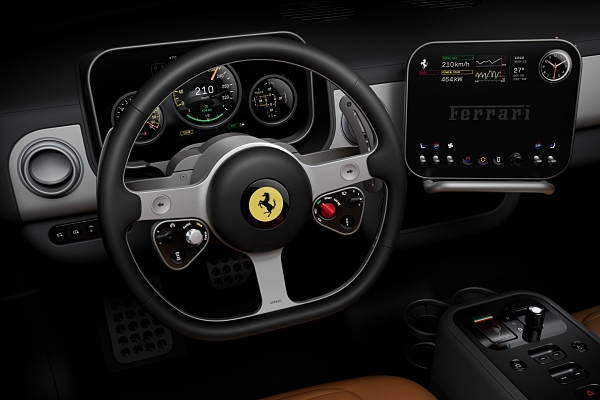
As the electric-vehicle era began, cars became increasingly minimalist and digital. Climate control knobs disappeared, door handles were hidden in the body, and volume dials were replaced by haptic sliders. But as regulatory pressure and consumer complaints grow, the auto industry is turning back to a trend of reintroducing physical buttons, Business Insider reported on Feb. 14.
Audi signaled a more tactile interior in the e-tron due to be released in 2027, and Ferrari fitted its first electric car, developed in collaboration with Jony Ive, with a large number of physical controls. Even Tesla is redesigning flush door handles. Volkswagen design chief Andreas Mindt said, "A car is not a phone. We will never make this mistake again."
Tesla led the shift toward touchscreen-driven design. The Model S was built around a 17-inch large touchscreen, which gave a premium feel while also cutting costs. Other models followed, including the Volkswagen ID.4, Rivian and the Ford Mustang Mach-E. But screens alone could not provide drivers with intuitive control.
China banned hidden door handles over safety issues, and the U.S. National Highway Traffic Safety Administration is investigating complaints related to electronic door mechanisms. Europe decided it would not give the highest safety rating to cars with many touchscreens. The vision that cars should function like smartphones remains valid, but physical buttons are increasingly seen as necessary when safety and intuitive usability are considered.
Digitalisation in cars is an unavoidable trend, but complete touchscreen dominance has sacrificed practicality and safety. The auto industry is now seeking a balance between technology and analogue feel. Physical buttons are back in focus not for simple retro appeal, but because they are an essential element for an intuitive and safe driving experience.
 Hyunwoo Choo
cookinpapa@d-today.co.kr
Hyunwoo Choo
cookinpapa@d-today.co.kr