
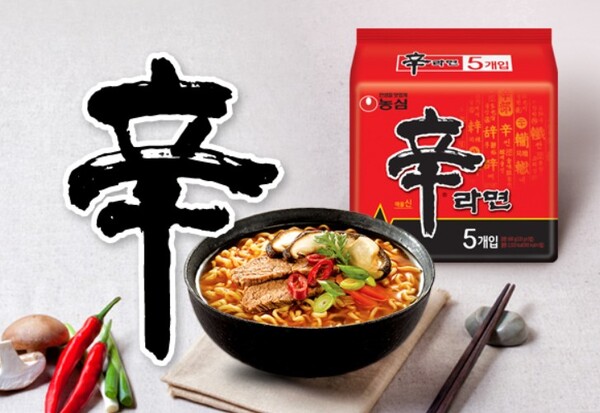
Nongshim, Samyang Foods, Ottogi and other major ramen makers will cut product prices from next month. But flagship products such as Shin Ramyun, Buldak Bokkeum Myun and Jin Ramen were excluded from the cuts. Critics say the companies are joining the government’s push for price cuts while freezing prices for well-known banner products through selective reductions.
As of March 16, major domestic ramen makers including Nongshim, Ottogi, Samyang Foods and Paldo have begun cutting prices on some products, the industry said. The ramen industry’s price cuts come about 2 years and 9 months after June 2023. Companies say they decided on the cuts to join efforts to stabilise prices.
Nongshim will lower prices on 16 products including Ansungtangmyun by an average 7.0 percent. The cuts cover Mupamatangmyun by 7.2 percent, Ansungtangmyun by 5.3 percent, and products including Yukgaejang Cup Noodles, Sarigomtangmyun and Jjawang. Samyang Foods will cut factory gate prices for two products, Samyang Ramen Original in bag and cup formats, by an average 14.6 percent. Ottogi will lower factory gate prices for eight products including Jin Jjamppong, Oyster Jin Jjamppong and Cream Jin Jjamppong by an average 6.3 percent. Paldo will cut prices on 19 products including Paldo Bibim Men, Teumsae Ramyun Spicy Kimchi and Wang Ttukkeong by an average 4.8 percent.
But with each company’s major ramen products excluded from the cuts, some point to a limited effect from the price adjustments. That is because 대표 products with high consumer recognition and large sales shares were left out.
The industry said the top 10 ramen products by sales in South Korea include Nongshim’s Shin Ramyun, Chapagetti, Yukgaejang, Ansungtangmyun and Neoguri, Samyang Foods’ Buldak Bokkeum Myun and Samyang Ramen, Ottogi’s Jin Ramen, and Paldo’s Paldo Bibim Men and Wang Ttukkeong.
Among them, Nongshim excluded three products from the price cuts: Shin Ramyun, its biggest seller, along with Chapagetti and Neoguri. Samyang Foods also froze the factory gate price of its flagship Buldak Bokkeum Myun. Ottogi did not include the price of Jin Ramen, its only product in the top 10, in the cuts.
Some analyses say the latest adjustments are selective cuts reflecting company-by-company circumstances rather than across-the-board reductions. They cite the won-dollar exchange rate staying at a high level and rising oil prices, saying companies face a significant burden in cutting prices uniformly even for flagship products with large sales shares.
Criteria for selecting products for price cuts differed by company. Nongshim prioritised the share of domestic sales. It explained that it selected items for cuts mainly among product groups that domestic consumers can tangibly feel, in line with the government’s stance on stabilising prices and restoring livelihoods.
A Nongshim official said, "We considered price cuts mainly for products with a high share of domestic sales that have a tangible impact on domestic consumers," adding, "In the case of Ansungtangmyun, it is a brand that sells more than 100 billion won annually."
Ottogi lowered prices mainly for product lines whose recognition has risen recently. An Ottogi official said, "Across the ramen industry, the cost environment has not been good, so there were many factors to consider in cutting prices," adding, "Among them, we selected items that are currently selling steadily."
Samyang Foods has shown a cautious stance on additional cuts, after joining price cuts in July 2023 and not participating in a price re-increase last year. Considering this, Buldak Bokkeum Myun, which has a large share of sales, is seen as having been excluded from the latest cuts. Nongshim, Ottogi and Paldo raised factory gate prices for major items such as ramen by about 7.2 percent in the first half of last year after cutting prices in 2023.
Paldo, however, decided to cut prices for its two top-10 products, Paldo Bibim Men and Wang Ttukkeong. A Paldo official said, "Although our market share is not high, we lowered the prices of products in the top 10 by sales so that consumers can feel the price cuts."
 Shin-hye Ahn
doubletap@d-today.co.kr
Shin-hye Ahn
doubletap@d-today.co.kr